
Defining Moments
From 1926 to today: Discover the founding leaders, innovations, and milestone achievements that shaped our profession.
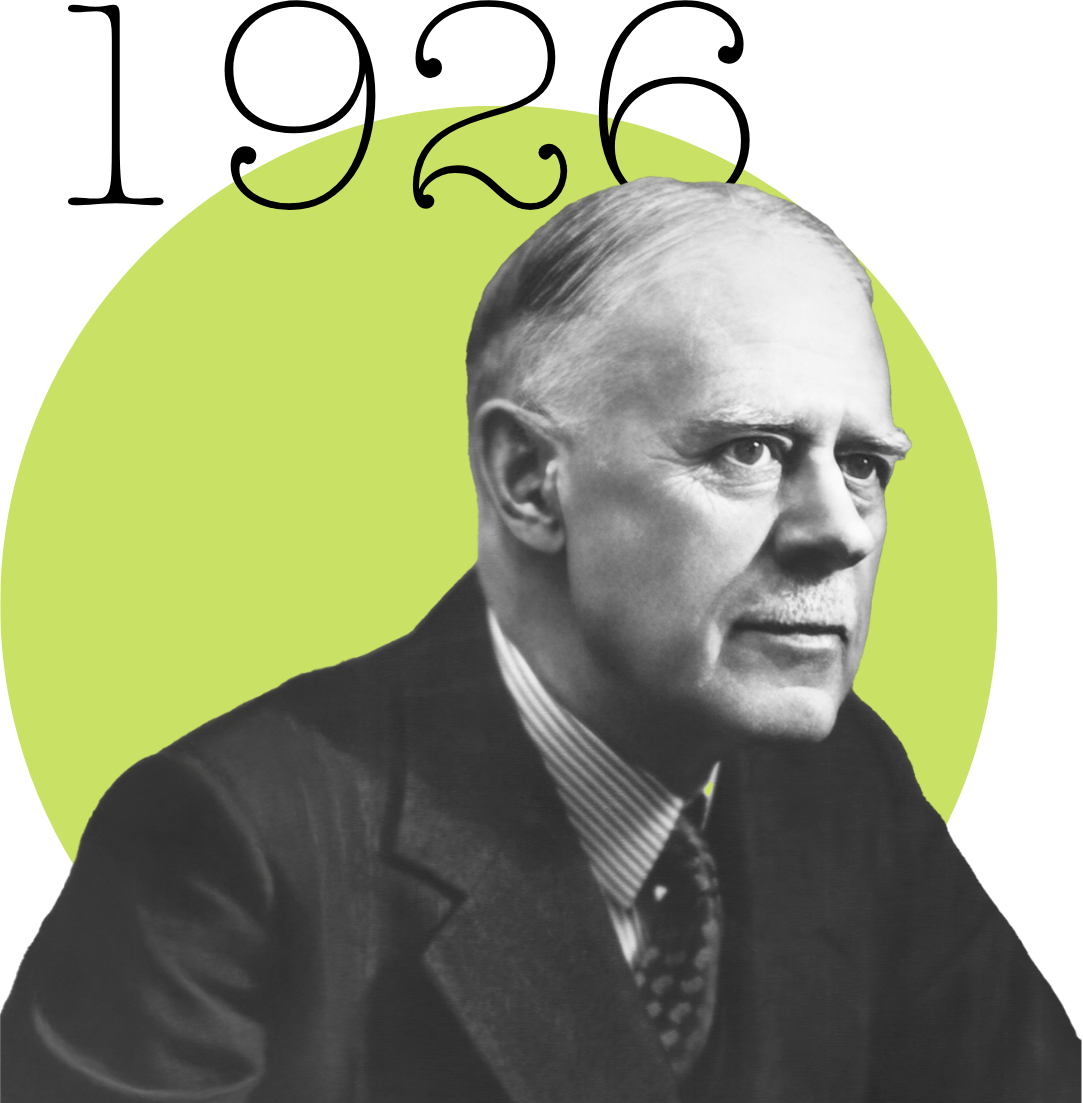
Dr. Goldwin W. Howland, CAOT’s first president
CAOT came into existence with a governance structure that included a board of management and OTs representing each province. Dr. Goldwin W. Howland, a neurologist, became CAOT's first president, and Dr. Alexander Primrose, a surgeon serving as the Dean of the Faculty of Medicine at the University of Toronto, took on the position of vice-president. W.J. Dunlop, who served as the Director of Extension at the University of Toronto, became CAOT’s secretary.
REFERENCE: Judith Friedland, I. R. (200g0). In The Beginning CAOT FROM 1926-1939. Retrieved from caot.ca: https://caot.ca/document/7489/CAOT1926_39.pdf

Doris Stupart, who graduated from the first ward aides course at the University of Toronto in 1918, helped organize the Ontario Society of Occupational Therapy and became its first President in 1920.
The first occupational therapy program started in Canada at the University of Toronto was based on a six-week “ward aides” course that started in 1918 “to prepare young women to teach various activities used to evaluate the interests and aptitudes of wounded soldiers." It was revived in 1926 after the Ontario Society of Occupational Therapy (OSOT) asked the university to establish a two-year occupational therapy educational program. It was the only occupational therapy university program offered in Canada until 1950 and the only program in Ontario until 1967.
REFERENCE: Judith Friedland, I. R. (2000). In The Beginning CAOT FROM 1926-1939. Retrieved from caot.ca: https://caot.ca/document/7489/CAOT1926_39.pdf

The first 20 graduates of the occupational therapy program at U of T.
Twenty students became Canada's first occupational therapy graduates upon completing the two-year program at the University of Toronto.
REFERENCE: U of T Library Archives
The Québec Society of Occupational Therapy Inc. (QSOT) was founded. The name later changed to Société des ergothérapeutes du Québec, thanks to the involvement of French-speaking graduates from the Université de Montréal. The Ordre des ergothérapeutes du Québec, the current professional order regulating the profession, was established in 1973.
REFERENCE: Judith Friedland, I. R. (2000). In The Beginning CAOT FROM 1926-1939. Retrieved from caot.ca: https://caot.ca/document/7489/CAOT1926_39.pdf
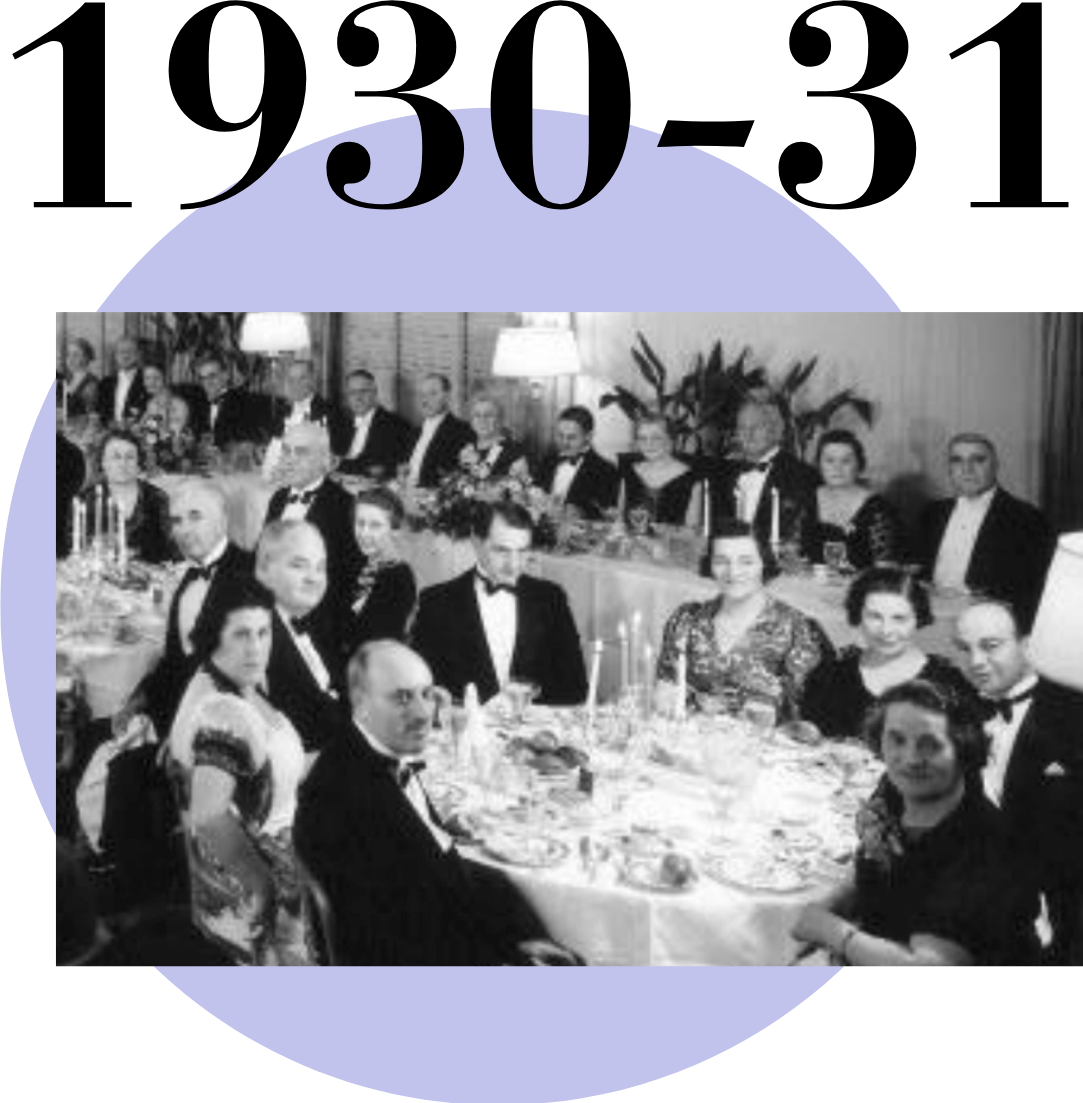
CAOT began to hold semi-annual conventions in 1931, such as this event in Montréal in 1939.
1930 CAOT's first annual meeting took place on October 16, 1930.
REFERENCE:
https://caot.ca/document/7489/CAOT1926_39.pdf
1931 The first CAOT "convention" took place n the fall at the invitation of the Canadian and American Hospital Associations and in conjunction with OSOT and the American Occupational Therapy Association (AOTA). The venue was the Automotive Building at the Canadian National Exhibition grounds in Toronto. AOTA held its annual meeting in Toronto at the same time to demonstrate friendship to their Canadian colleagues and show gratitude to Canada for developing occupational therapy during World War I.
REFERENCE: Judith Friedland, I. R. (2000). In The Beginning CAOT FROM 1926-1939. Retrieved from caot.ca: https://caot.ca/document/7489/CAOT1926_39.pdf
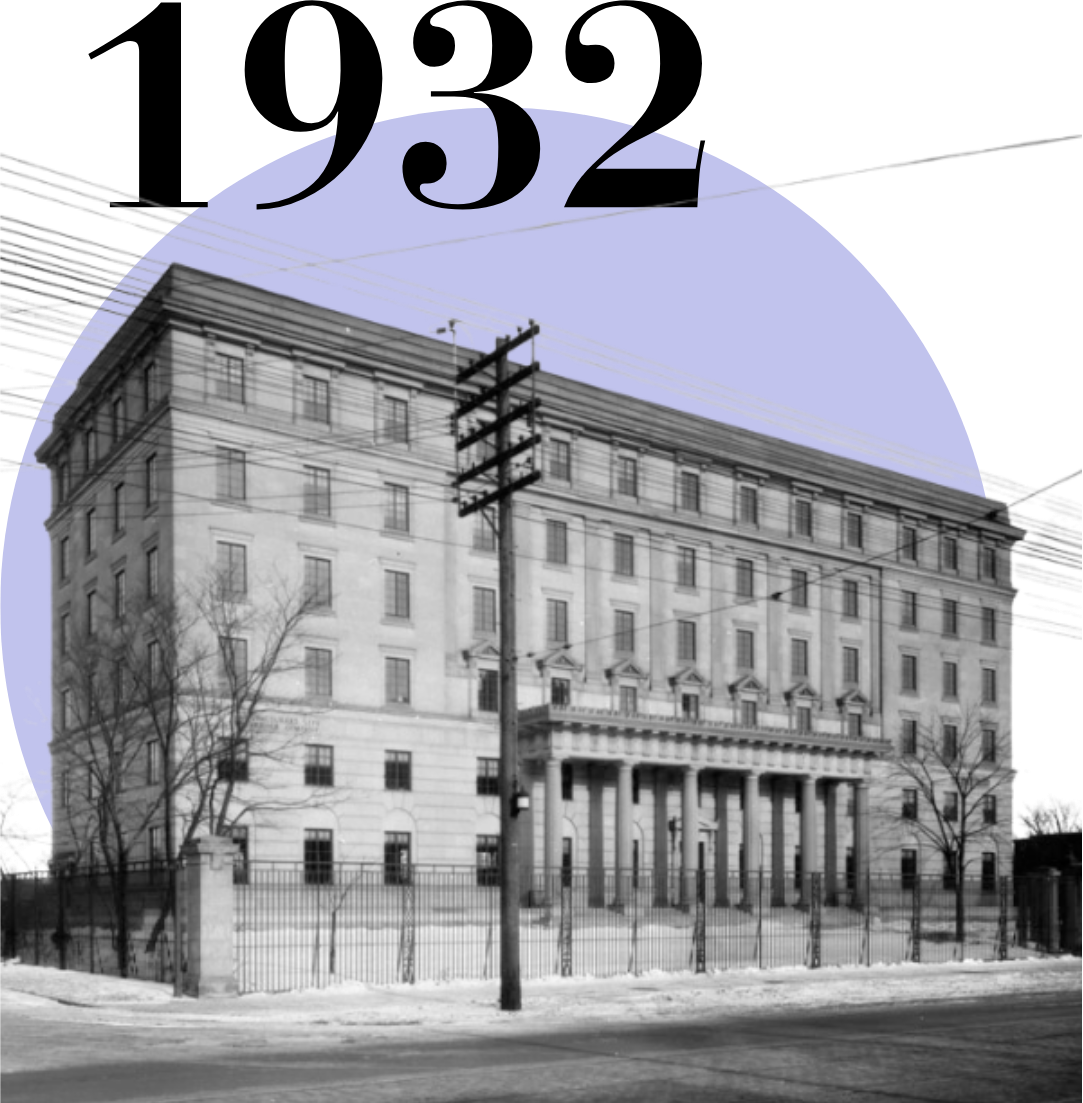
Manulife’s (then called Manufacturers Life) head office in Toronto in 1929.
A Dominion Charter application was submitted for CAOT by Ross Gooderham, then vice-president and general counsel for the Manulife Insurance Company of Canada. The Dominion Charter would allow CAOT to operate as an organization across Canada.
REFERENCE: Friedland, J. (2011). Restoring the Spirit: The Beginnings of Occupational Therapy in Canada, 1890-1930. In J. Friedland, Restoring the Spirit: The Beginnings of Occupational Therapy in Canada, 1890-1930 (p. 116). McGill-Queen's University Press.
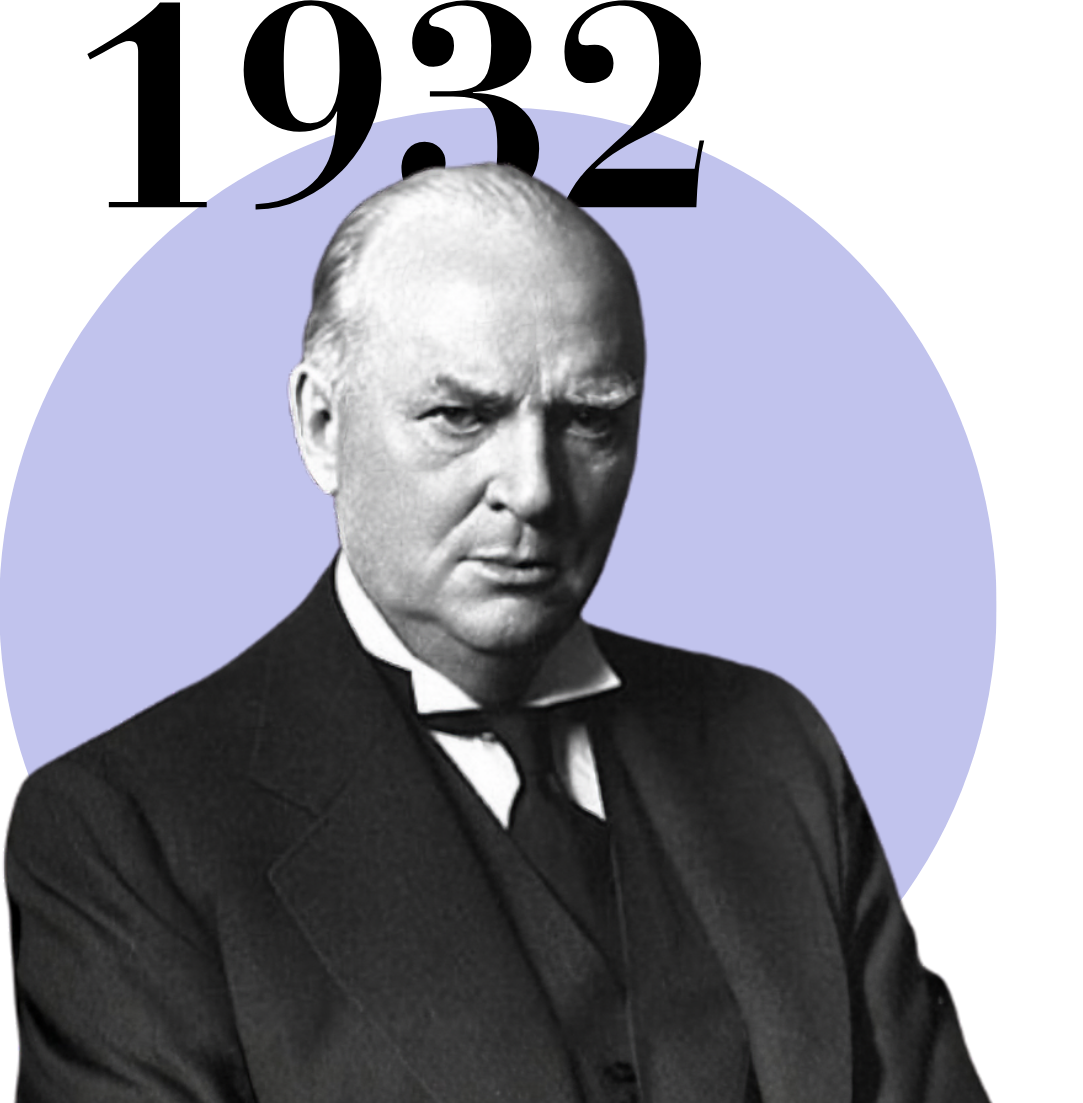
R.B. Bennett, Canada’s 11th Prime Minister, served from 1930-1935.
The first successful CAOT advocacy campaign occurred during the Depression when the federal government announced the closure of occupational therapy departments in veterans' hospitals without consulting medical officers. The CAOT Board responded by passing a resolution that was sent to Prime Minister R.B. Bennett and launching a letter-writing campaign. They enlisted support from organizations like the Canadian Red Cross and the Local Council for Women. Following a meeting between Ottawa-based physicians and the CAOT Board, OTs retained their positions, and the veterans' hospital leadership agreed to provide two student internships, which expanded the profession's reach.
REFERENCE: Friedland, J. (2011). Restoring the Spirit: The Beginnings of Occupational Therapy in Canada, 1890-1930. In J. Friedland, Restoring the Spirit: The Beginnings of Occupational Therapy in Canada, 1890-1930 (p. 116). McGill-Queen's University Press.
The University of Toronto occupational therapy program was suspended following struggles with funding and employment prospects as the Depression took hold across the country. The program’s funding was tied to enrollment, and CAOT, knowing the lack of jobs, could not reconcile taking in the number of students required to maintain the university's support.
REFERENCE: Judith Friedland, I. R. (2000). In The Beginning CAOT FROM 1926-1939. Retrieved from caot.ca: https://caot.ca/document/7489/CAOT1926_39.pdf
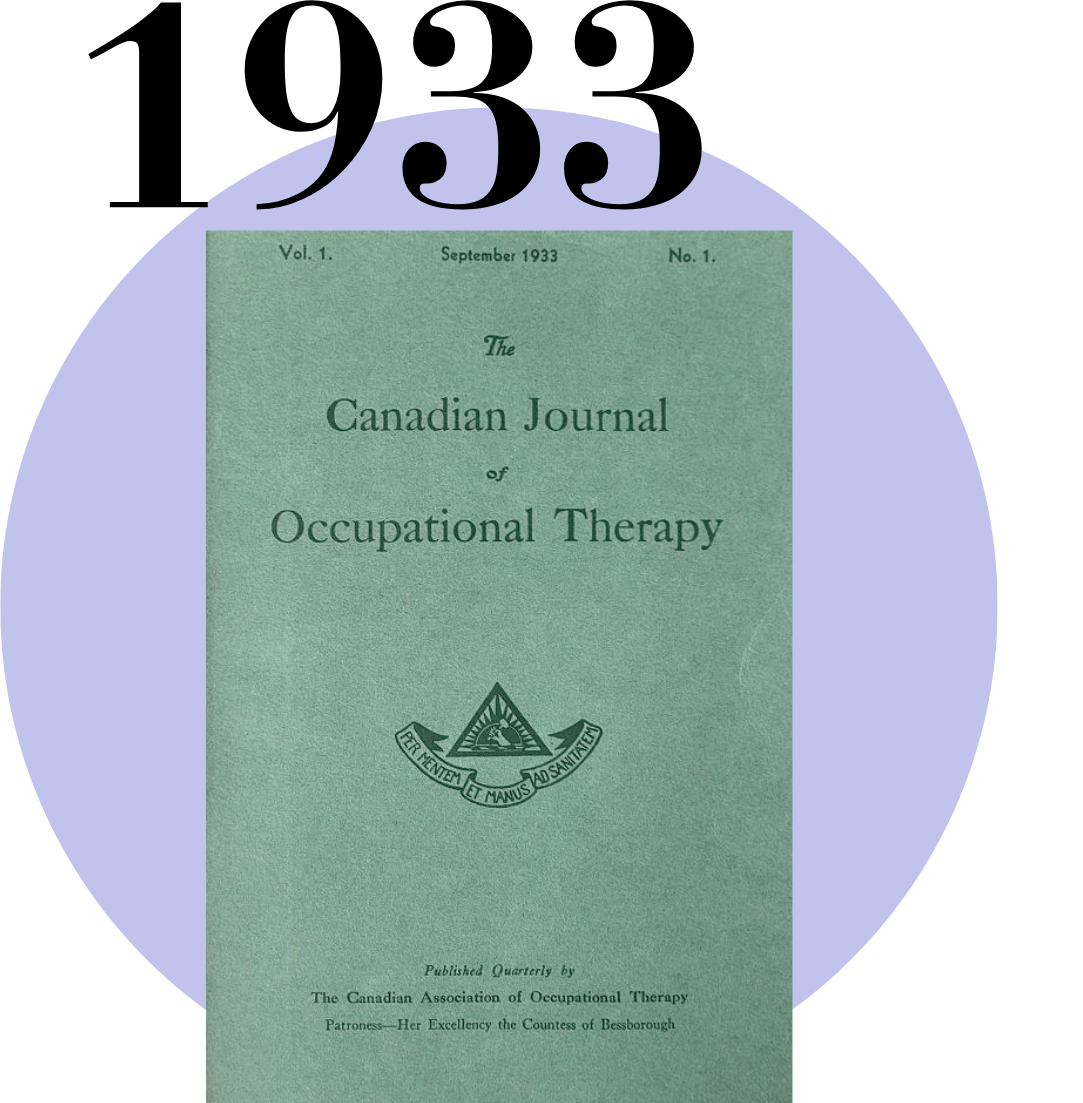
The cover of the first issue of CJOT.
The first issue of the Canadian Journal of Occupational Therapy (CJOT) was published in September 1933, with an insignia by Fryer (who had designed the first uniforms) and the motto “per mentum et manus ad sanitatem” (which means “through mind and hand to health”) on its cover. President Howland sent it to more than 700 institutions, to entire medical staffs and management boards where occupational therapy was already established, and to 20 or 30 more where it was felt there was room for development.
REFERENCE: Judith Friedland, I. R. (2000). In The Beginning CAOT FROM 1926-1939. Retrieved from caot.ca: https://caot.ca/document/7489/CAOT1926_39.pdf

The Astley Ainslie Institute in Edinburgh, Scotland, seen here in 1940, became a pioneer in occupational therapy, thanks to its collaboration with Canadian OTs.
Canadian OTs began establishing international connections. Agnes Mark went to Shanghai, China, to set up the country's first occupational therapy program, and Amy DesBrisay started working at Scotland's Astley Ainslie Institution in Edinburgh. During her four-month stay, she successfully established an occupational therapy department at what was described as "one of the most beautiful and best-equipped convalescent homes in the world." Her successor, Mabel McNeill McRae, continued to develop the program and design workshops. This pioneering exchange led to other Canadian OTs following to continue the work and establish Scotland's first occupational therapy school by 1937, creating the "steady and cordial relationship" between Canadian and British institutions.
REFERENCE: Trust, A. A. (2025). The Astley Ainslie Hospital – Its past and future. Retrieved from acct.scot: https://www.aact.scot/history-blog/the-astley-ainslie-hospital-its-past-and-future
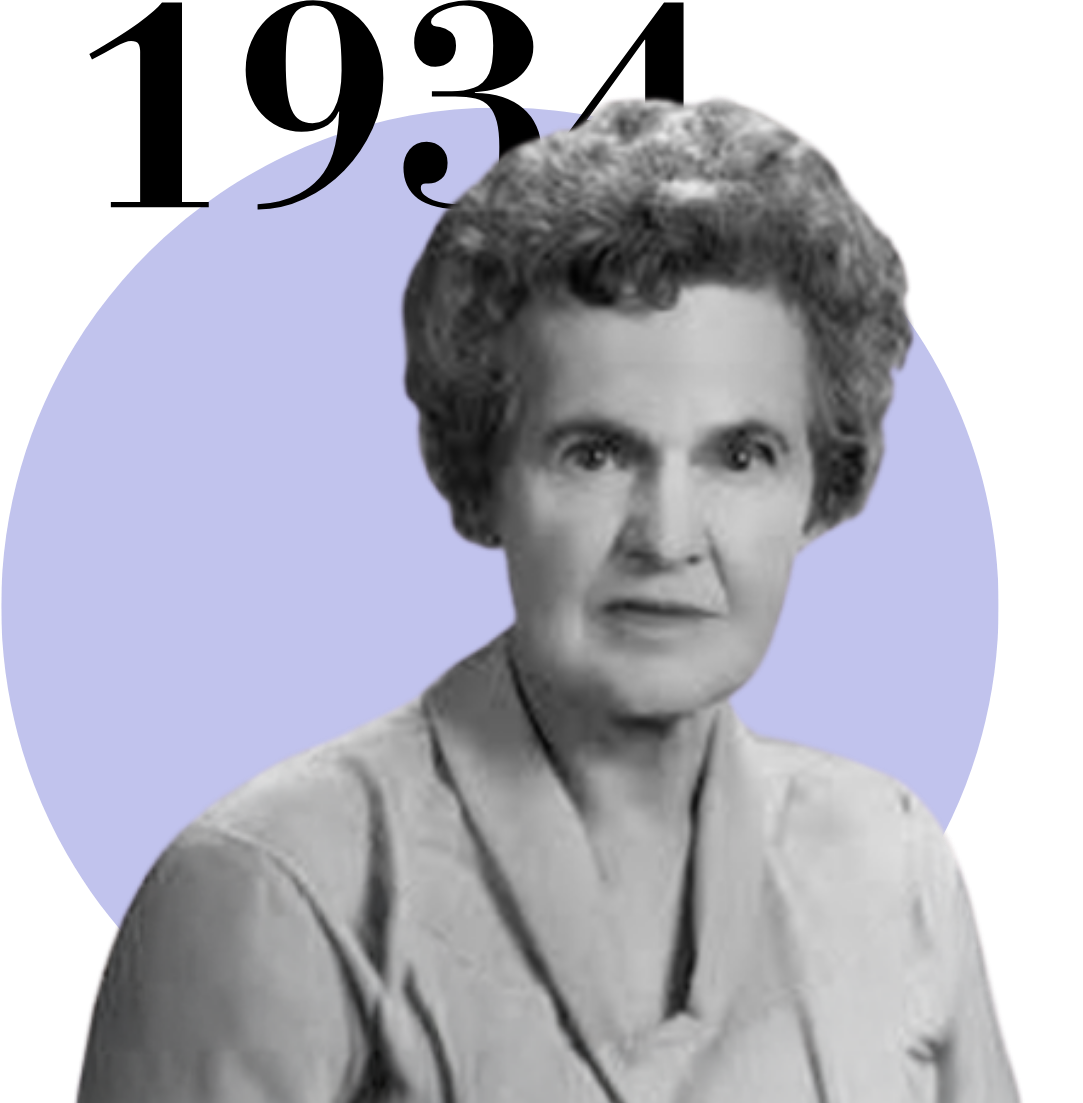
Helen P. LeVesconte, one of Canada’s first OTs, took on dual leadership roles – Supervisor of U of T's occupational therapy program and Director at Toronto Psychiatric Hospital.
The OT program resumed at the University of Toronto under the direction of Helen P. LeVesconte, who was one of the very first occupational therapists in Canada, graduating from the University of Toronto's inaugural class in 1928. Helen was a prominent figure in the profession until her death in 1982.
REFERENCE: Judith Friedland, I. R. (2000). In The Beginning CAOT FROM 1926-1939. Retrieved from caot.ca: https://caot.ca/document/7489/CAOT1926_39.pdf
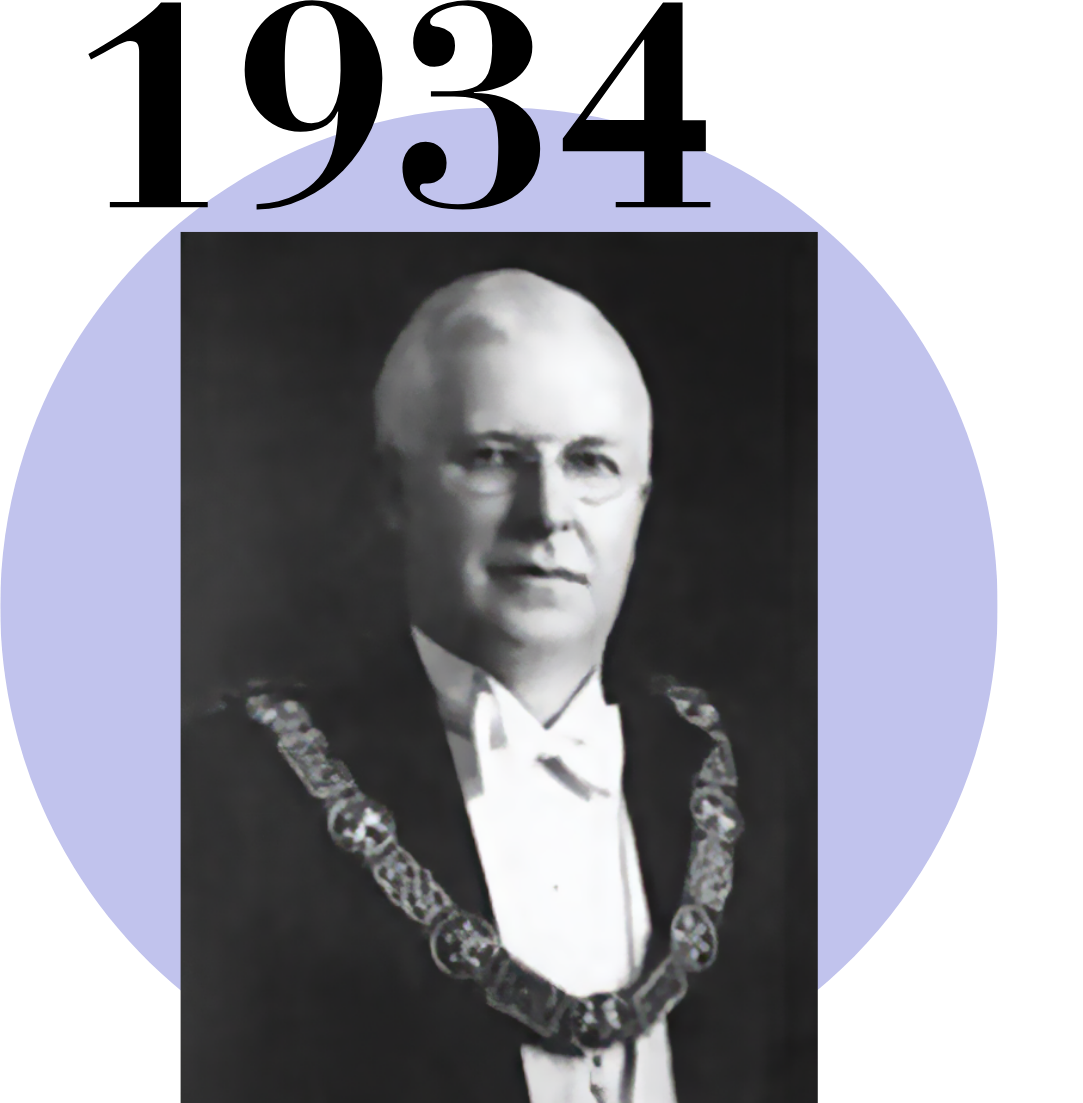
Along with being a founding member, W.J. Dunlop served as CAOT’s first secretary.
CAOT was officially incorporated on April 17, 1934, by Letters Patent under the Dominion Charter. The founding members were Dr. Goldwin Howland, W.J. Dunlop, Director of Extension at the University of Toronto (U of T), Dr. Robert E. Gaby, a professor with the first U of T occupational therapy program, and two ward aides who had graduated from the program – Helen Mowat and Kathleen deCourcy O’Grady. Affiliated members included the Ontario Society of Occupational Therapy, the Québec Society of Occupational Therapy, and the Toronto Association of Occupational Therapy.
REFERENCE: Judith Friedland, I. R. (2000). In The Beginning CAOT FROM 1926-1939. Retrieved from caot.ca: https://caot.ca/document/7489/CAOT1926_39.pdf

An OT in the pottery room working with a military trooper, circa 1940s. Credit: National Film Board
Dr. Howland reported that there were OTs in all the provinces except the three maritime provinces – Nova Scotia, New Brunswick, and Prince Edward Island (Newfoundland & Labrador didn’t become Canada’s 10th province until 1949). He said OTs could be found in the “outdoor departments” of general hospitals, and aides in mental hospitals were tasked with following up on the treatment of discharged patients.
REFERENCE: Judith Friedland, I. R. (2000). In The Beginning CAOT FROM 1926-1939. Retrieved from caot.ca: https://caot.ca/document/7489/CAOT1926_39.pdf

An OT in the pottery room working with a military trooper, circa 1940s.
Occupational therapy could be found in seven hospitals in Québec, and several OTs were doing “field service,” or community work, according to the University of Toronto Monthly. The Montréal Industrial Institute, a curative workshop, and occupational therapy at Verdun Protestant Hospital were already well established.
REFERENCE: Judith Friedland, I. R. (2000). In The Beginning CAOT FROM 1926-1939. Retrieved from caot.ca: https://caot.ca/document/7489/CAOT1926_39.pdf
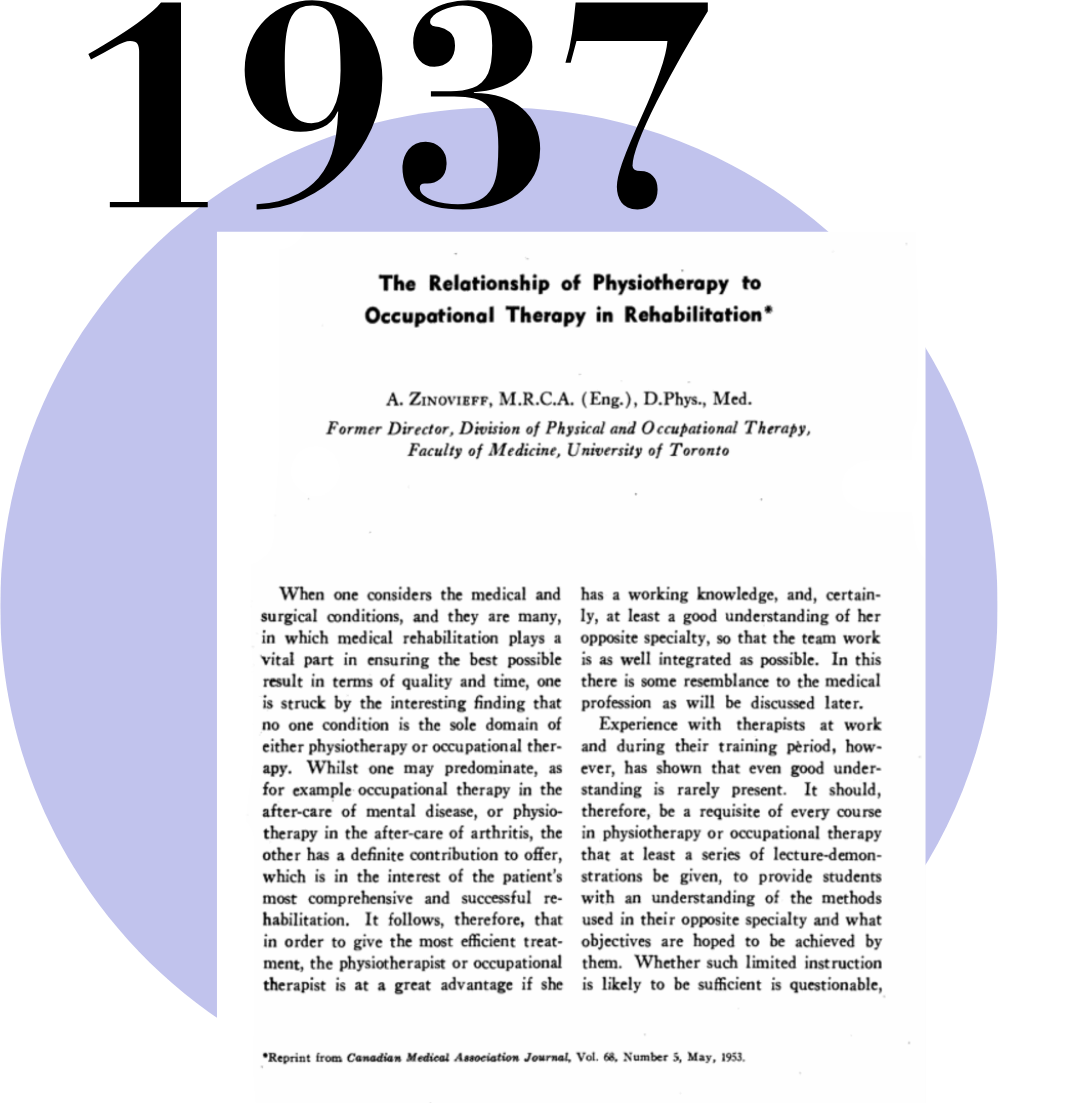
A reprint of “The Relationship of Physiotherapy to Occupational Therapy in Rehabilitation,” an article published in the Canadian Medical Association in 1953.
CJOT amalgamated with The Bulletin of the Canadian Physiotherapy Association after experiencing financial difficulties. The publication was named the Canadian Journal of Occupational Therapy and Physiotherapy.
REFERENCE: Judith Friedland, I. R. (2000). In The Beginning CAOT FROM 1926-1939. Retrieved from caot.ca: https://caot.ca/document/7489/CAOT1926_39.pdf
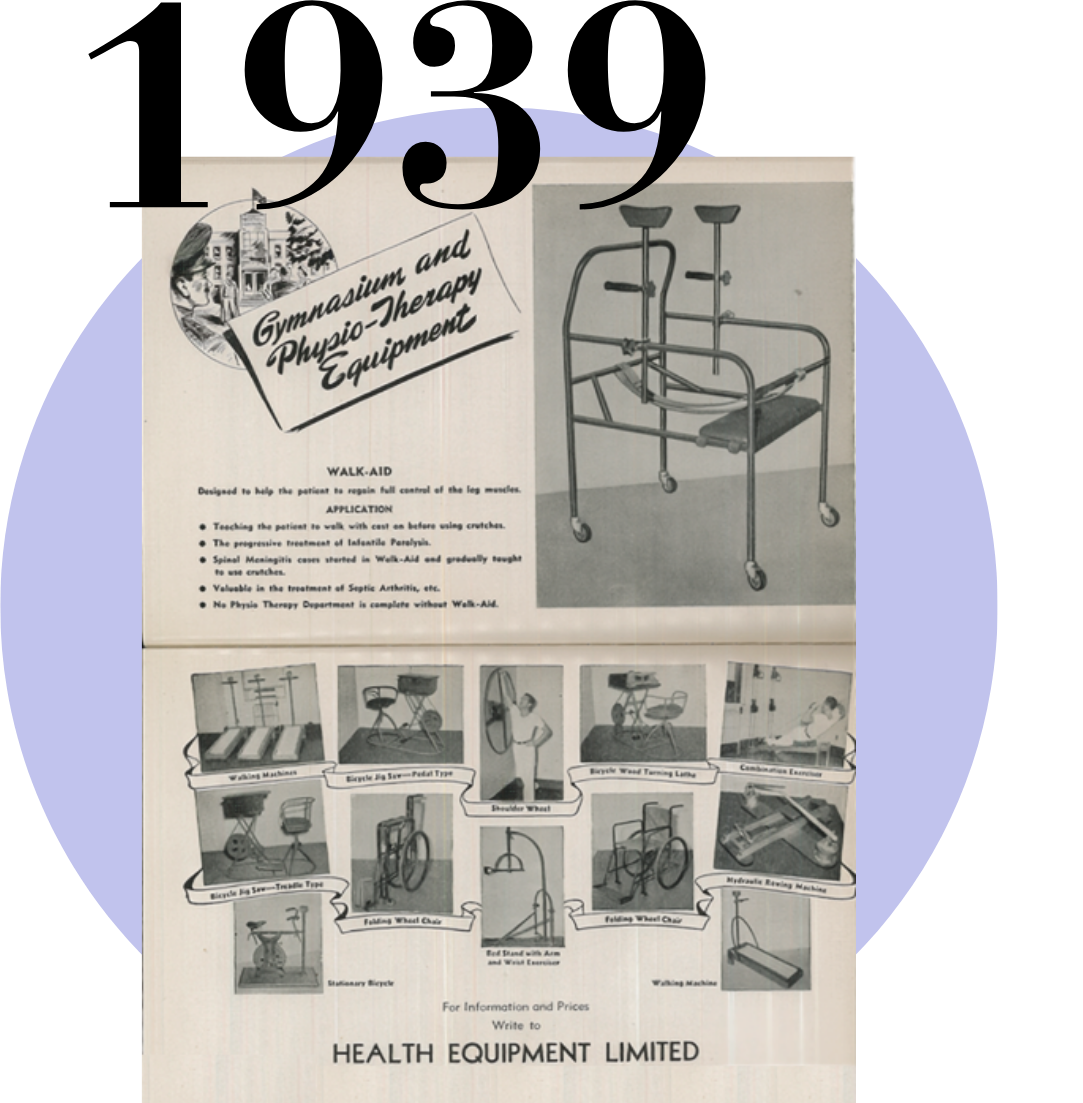
An ad for gym and exercise equipment from a 1944 CJOT issue.
CJOT separated from the joint publication with the Canadian Physiotherapy Association, and it has continued to have a sole focus on occupational therapy ever since.
REFERENCE: Judith Friedland, I. R. (2000). In The Beginning CAOT FROM 1926-1939. Retrieved from caot.ca: https://caot.ca/document/7489/CAOT1926_39.pdf
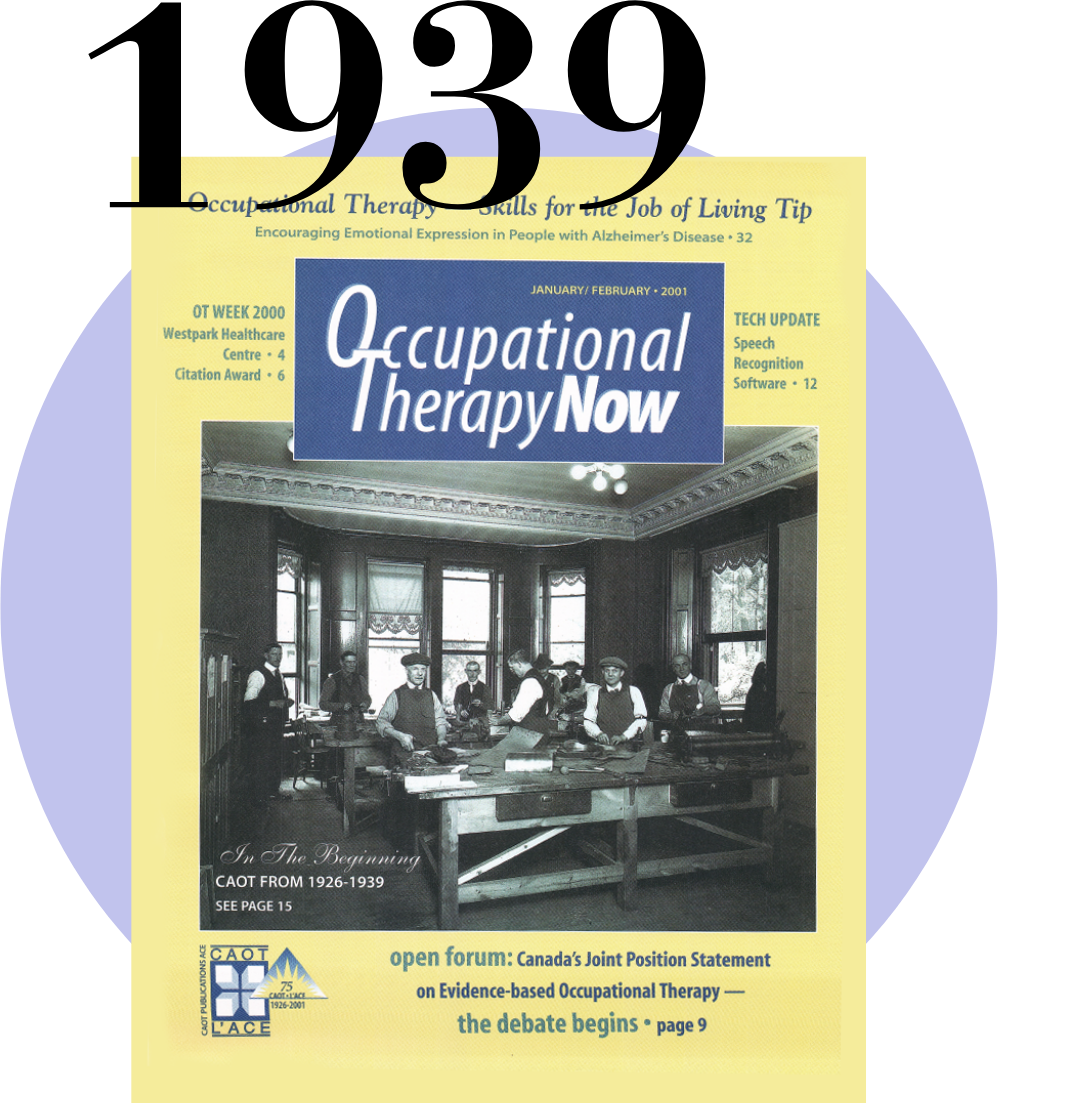
The 75th anniversary issue of OT Now shared an article about CAOT’s beginnings from 1926-1939.
Occupational Therapy Now (OT Now), CAOT’s practice magazine, began as a single-page printed document for members called The Newssheet. From this small beginning, it would evolve to become known as first, The Newsletter, then The National, and finally the present publication, OT Now, which is open access to the public and delivered virtually four times a year.
REFERENCE: Judith Friedland, I. R. (2000). In The Beginning CAOT FROM 1926-1939. Retrieved from caot.ca: https://caot.ca/document/7489/CAOT1926_39.pdf

Prime Minister William Lyon Mackenzie King served for three non-consecutive terms from 1921 to 1926, 1926 to 1930, and 1935 to 1948
CAOT, which now represented close to 1,000 OTs across the country, offered its services to assist the injured soldiers of World War II. Dr. Howland sent messages to Prime Minister William Lyon Mackenzie King, the Minister of National Defence, and the Minister of Health for Ontario. He also requested that the Department of Defence consider placing OTs not only in military hospitals in Canada, but also overseas.
REFERENCE: Judith Friedland, I. R. (2000). In The Beginning CAOT FROM 1926-1939. Retrieved from caot.ca: https://caot.ca/document/7489/CAOT1926_39.pdf
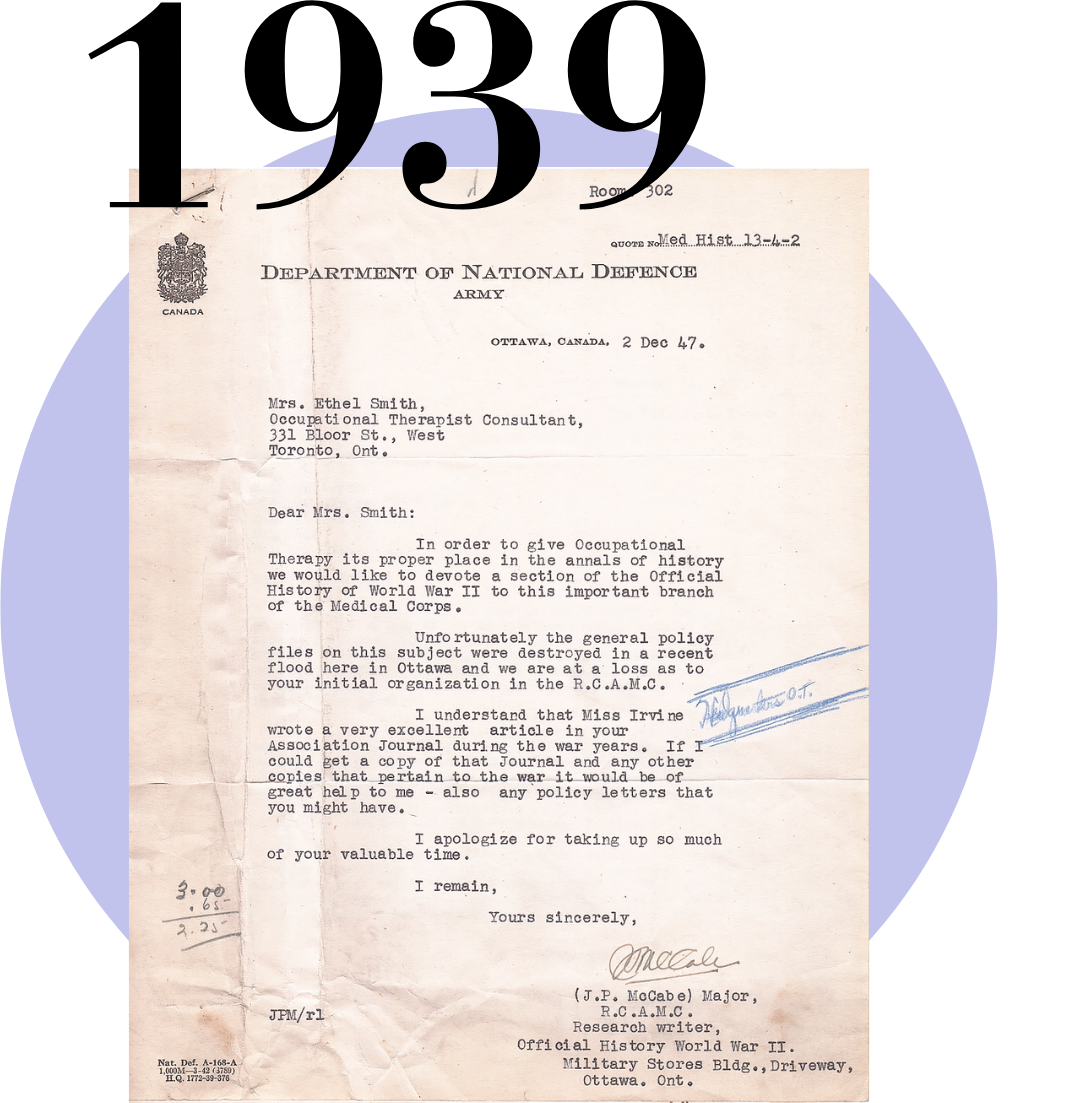
A 1947 letter addressed to Ethel Smith from a member of the Department of National Defence.
After much lobbying, CAOT received a grant which allowed it to set up a central office, and Ethel Clarke Smith, who graduated as an OT in 1930, was hired as its Executive Consultant. Her job included travelling across the country and developing links among OTs. She also interviewed candidates and recommended appointments for all job openings listed with the registry. The title of Executive Consultant was used until 1972, when it was changed to Executive Director.
REFERENCE: Cockburn, L. (2001, March/April). The greater the barrier, the greater the success: CAOT DURING THE 1940’S. Retrieved from caot.ca: https://caot.ca/document/7490/CAOT1940.pdf
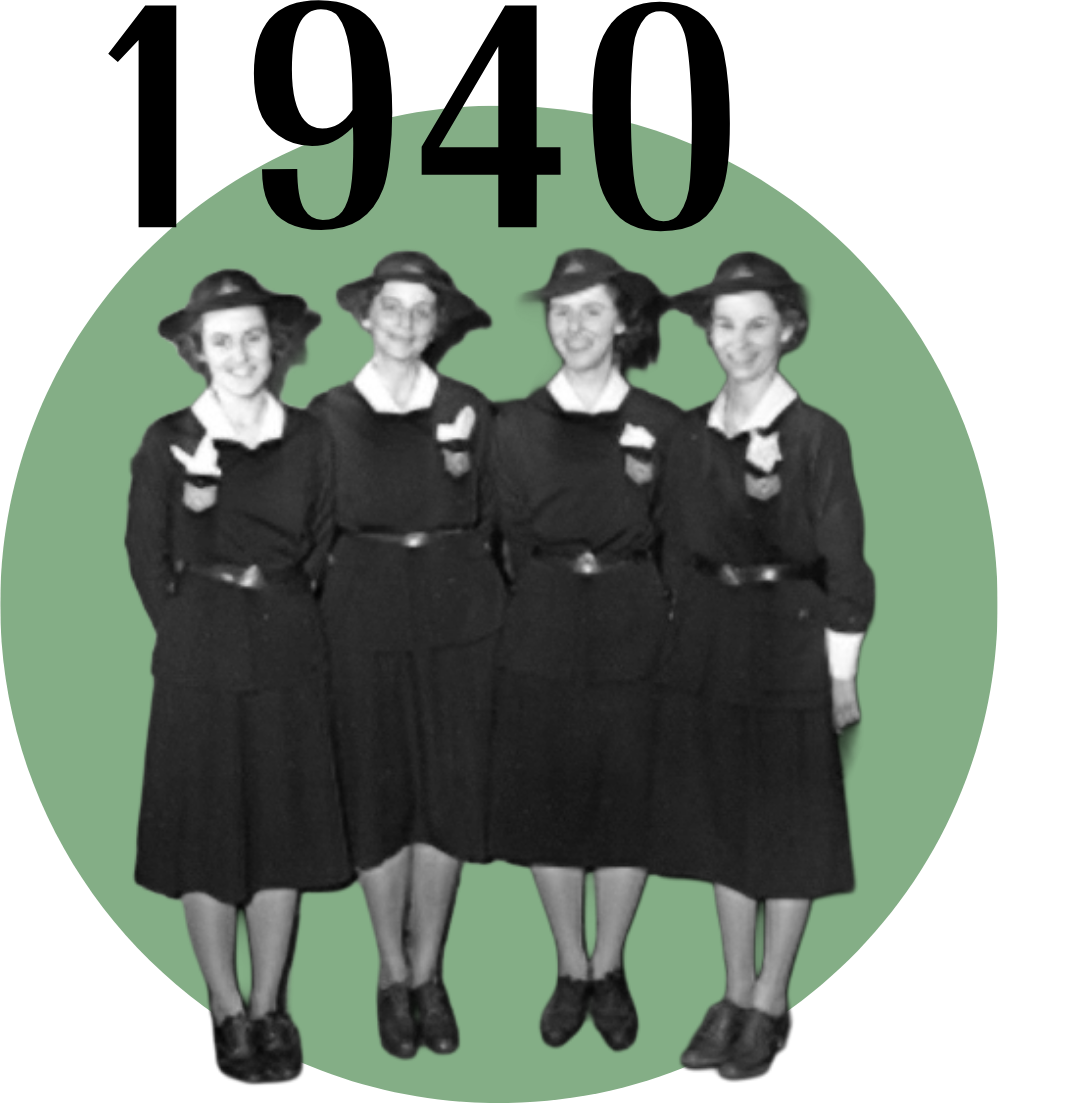
Dorothy Grant, Amy de Brisay, Josephine Forbes, and Mary Clarke Ray were some of the first OTs to serve through the British War Office.
Volunteer Canadian OTs were dispatched overseas to organize departments of occupational therapy and an educational program at the request of the British War Office and the Department of Health of Scotland. Five occupational therapists arrived in the United Kingdom the following February for posting.
REFERENCE: Cockburn, L. (2001, March/April). The greater the barrier, the greater the success: CAOT DURING THE 1940’S. Retrieved from caot.ca: https://caot.ca/document/7490/CAOT1940.pdf

May Hamilton, an OT who graduated from U of T in 1944 and the aunt of OT Juliette (Archie) Cooper, worked at Camp Hill Veterans Hospital in Halifax with injured World War II soldiers.
Following extensive advocacy efforts by CAOT and Dr. Howland, the Department of Defence finally announced that OTs could enlist in the Royal Canadian Army Medical Corps (RCAMC), in the division of the Nursing Corps.
REFERENCE: Cockburn, L. (2001, March/April). The greater the barrier, the greater the success: CAOT DURING THE 1940’S. Retrieved from caot.ca: https://caot.ca/document/7490/CAOT1940.pdf

OT Margaret Hood was awarded the Royal Red Cross Medal for her active-duty service overseas. She would go on to become the first occupational therapy instructor at the University of British Columbia in 1961 and served as Head of the Division of Occupational Therapy until her retirement in 1979.
1945
By the end of the war, 82 OTs had served in the Army, Navy, or BEMS, and 47 OTs had served overseas.
REFERENCE: Cockburn, L. (2001, March/April). The greater the barrier, the greater the success: CAOT DURING THE 1940’S. Retrieved from caot.ca: https://caot.ca/document/7490/CAOT1940.pdf
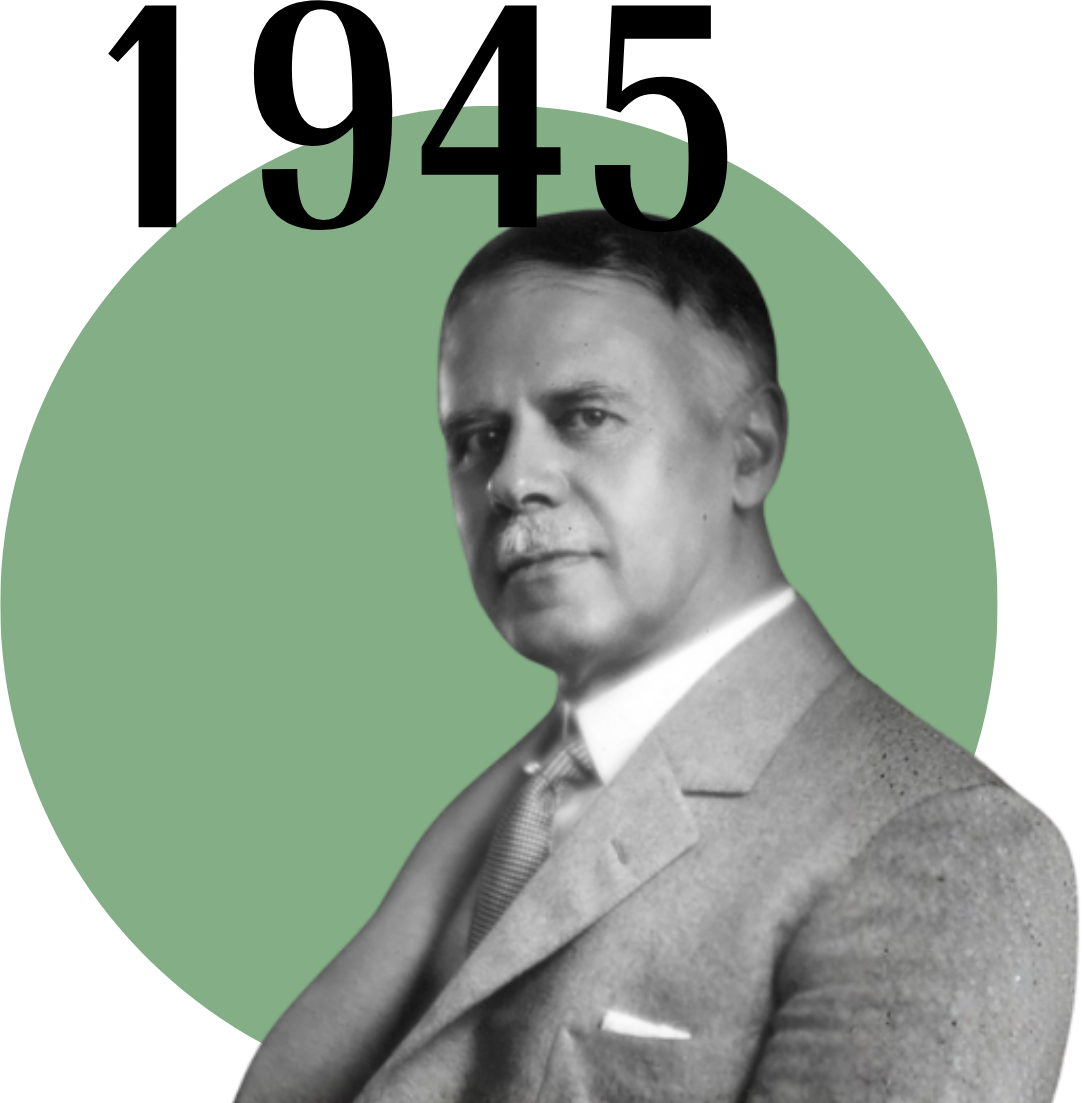
Dr. Goldwin W. Howland retired in 1945, but he continued to practice as a neurologist until his sudden death at age 75 in 1950.
A post-graduate scholarship named for Dr. Goldwin W. Howland, CAOT's first president, was established in appreciation of his many years of untiring dedication and work to the association and the occupational therapy profession. The scholarship was started by Canadian OTs who served in Great Britain during World War II, and OTs across Canada contributed funds to support it.
REFERENCE: CAOT files (60 Years of Occupational Therapy Anniversary Calendar)
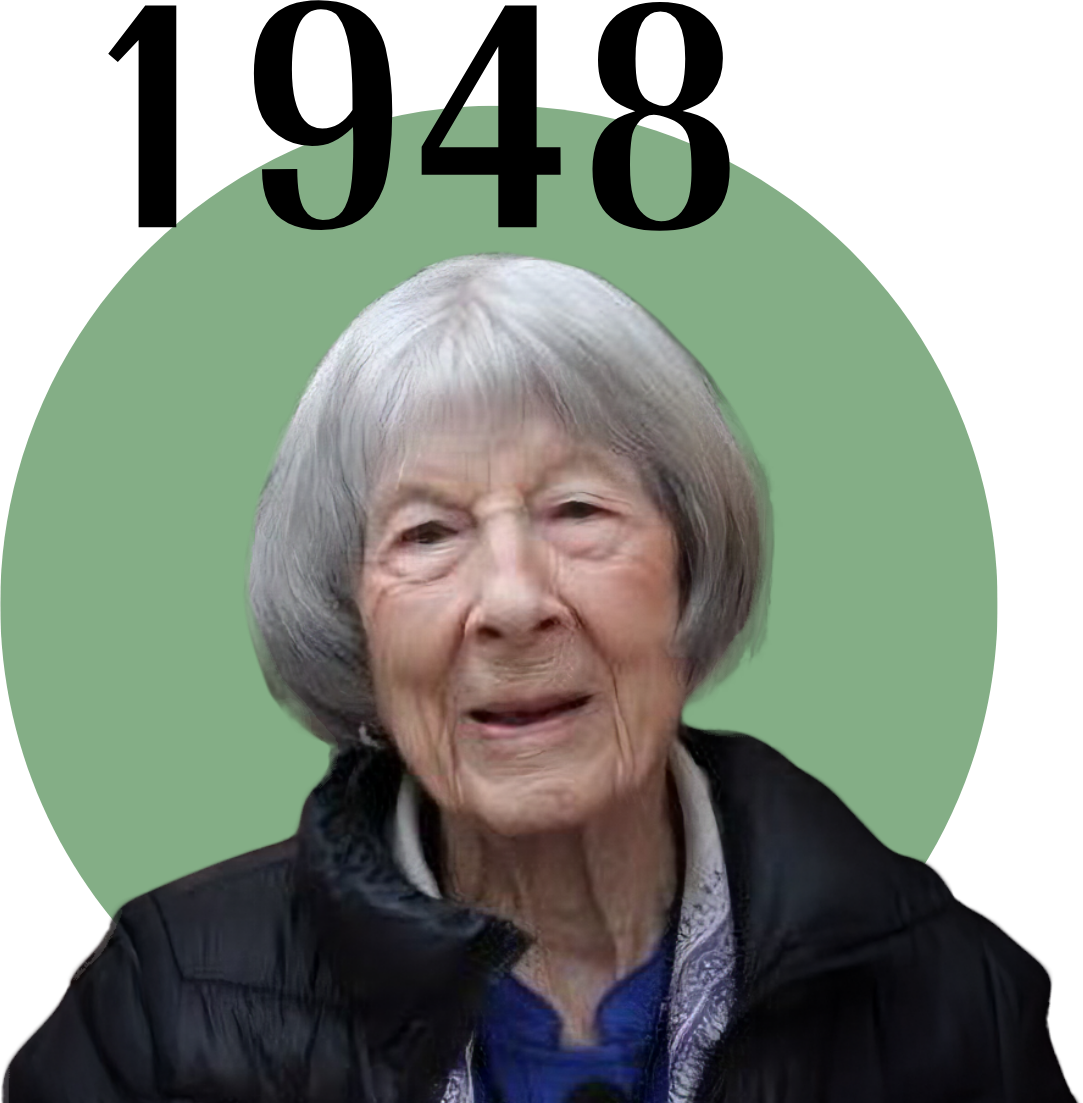
Beth Pierce Robinson, seen here in 2023 at the age of 103, evolved from OT to art therapist to writer, culminating in her retirement with the publication of her memoir, Please Write. It chronicles her wartime romance during World War II as she worked as an OT in a Montréal military hospital and her beau served as a medic with the U.S. Army across North Africa, Italy, and Europe.
Elizabeth Pierce Robinson became the first OT to serve as CJOT editor. The journal had increased to four issues annually the year before, and it remained the cornerstone of occupational therapy research while reflecting the diversity of occupational therapy work across Canada.
REFERENCE: Cockburn, L. (2001, March/April). The greater the barrier, the greater the success: CAOT DURING THE 1940’S. Retrieved from caot.ca: https://caot.ca/document/7490/CAOT1940.pdf
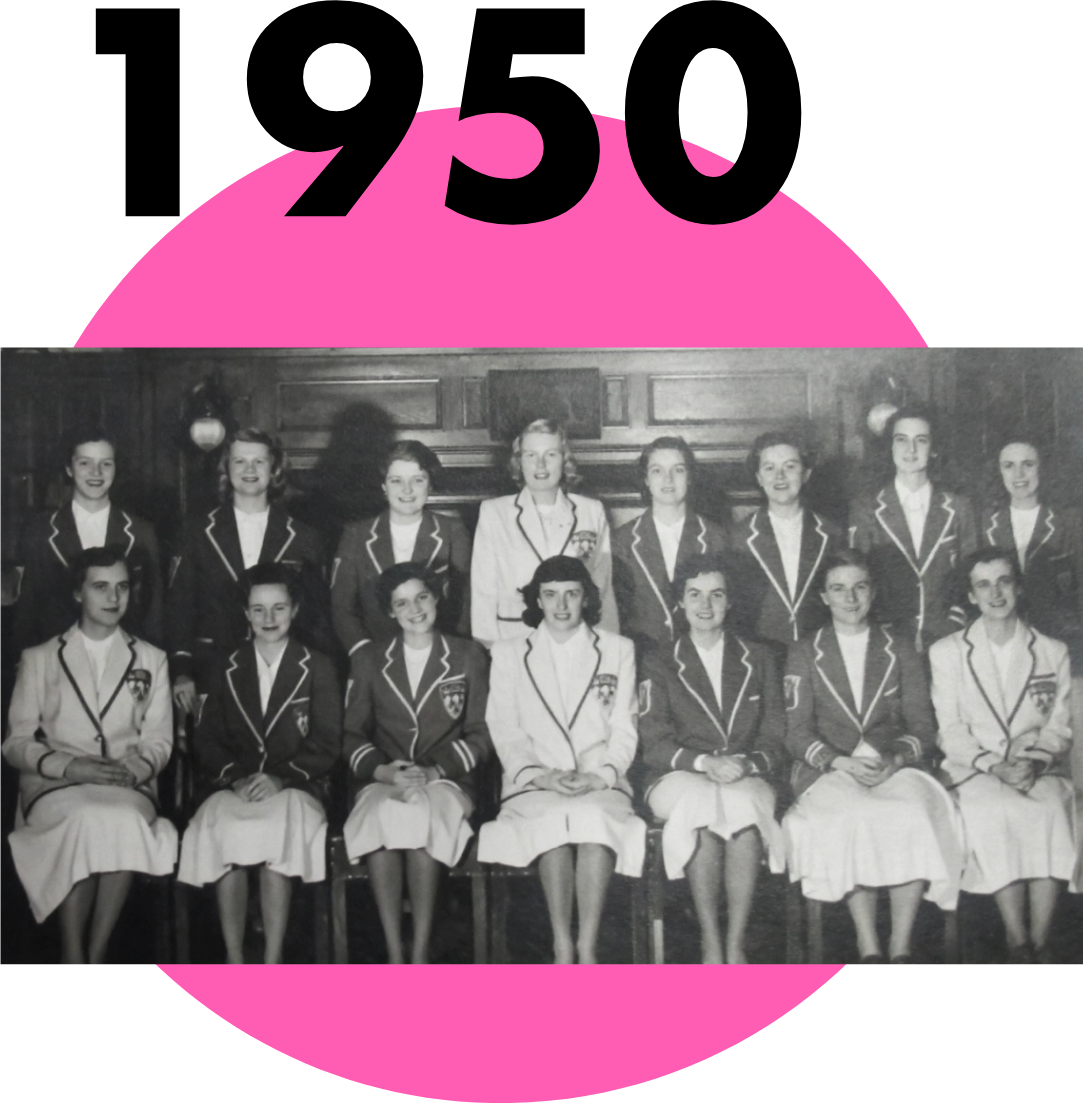
The Class of 1951, School of Physical & Occupational Therapy, McGill University.
A three-year combined Physical and Occupational Therapy diploma program was introduced at McGill University, followed by two-month internships in each profession. The following year, it became known as the School of Physical & Occupational Therapy (SPOT).
REFERENCE: McGill University. (2025). The History of Rehabilitation at McGill. Retrieved from mcgill.ca: https://www.mcgill.ca/spot/about/history
The Nova Scotia Society of Occupational Therapists (NSSOT) was formed.
REFERENCE: (40 Years of Excellence , 2025)

Notable Canadians OTs Isobel Robinson, Helen P. LeVesconte (third from left), and Muriel Driver attended early WFOT meetings.
The World Federation of Occupational Therapy (WFOT) was created in Liverpool, England, with CAOT as one of the 10 original associations. The other countries included Australia, Denmark, India, Israel, New Zealand, South Africa, Sweden, the United Kingdom (England and Scotland), and the United States of America. The first officers elected included Canadian OT Gillian Crawford as First Vice-President.
WFOT’s Constitution established its initial objectives: to serve as the official international organization for occupational therapy, promote international cooperation among associations and OTs, advance practice standards and professional ethics, facilitate OT and student exchanges, promote information sharing and education, and hold international congresses.
REFERENCE: World Federation of Occupational Therapists. (2025). History. Retrieved from wfot.org: https://wfot.org/about/history#:~:text=The%20World%20Federation%20of%20Occupational,28%20representatives%20from%20various%20countries

OTA trainees gain practice experience at the Ontario Hospital – Kingston, which was later renamed the Kingston Psychiatric Hospital, in 1956.
The first occupational therapy assistant (OTA) program in Canada was established at the Kingston Psychiatric Hospital in Ontario under the auspices of the Department of Health. There was an increasing need for more occupational therapy services in psychiatry, so the program focused on training OTAs for all Ontario psychiatric hospitals. While CAOT cooperated in implementing this program, it did not accredit the program or officially recognize the graduates.
REFERENCE: Maxwell &Maxwell,1978; Salvatori, Penny. "The history of occupational therapy assistants in Canada: a comparison with the United States." Canadian Journal of Occupational Therapy, vol. 68, no. 4, Oct. 2001, pp. 217+. Gale OneFile: Health and Medicine, www.link.gale.com/apps/doc/A200730885/HRCA?u=anon~d25d433&sid=googleScholar&xid=e1035a4a.
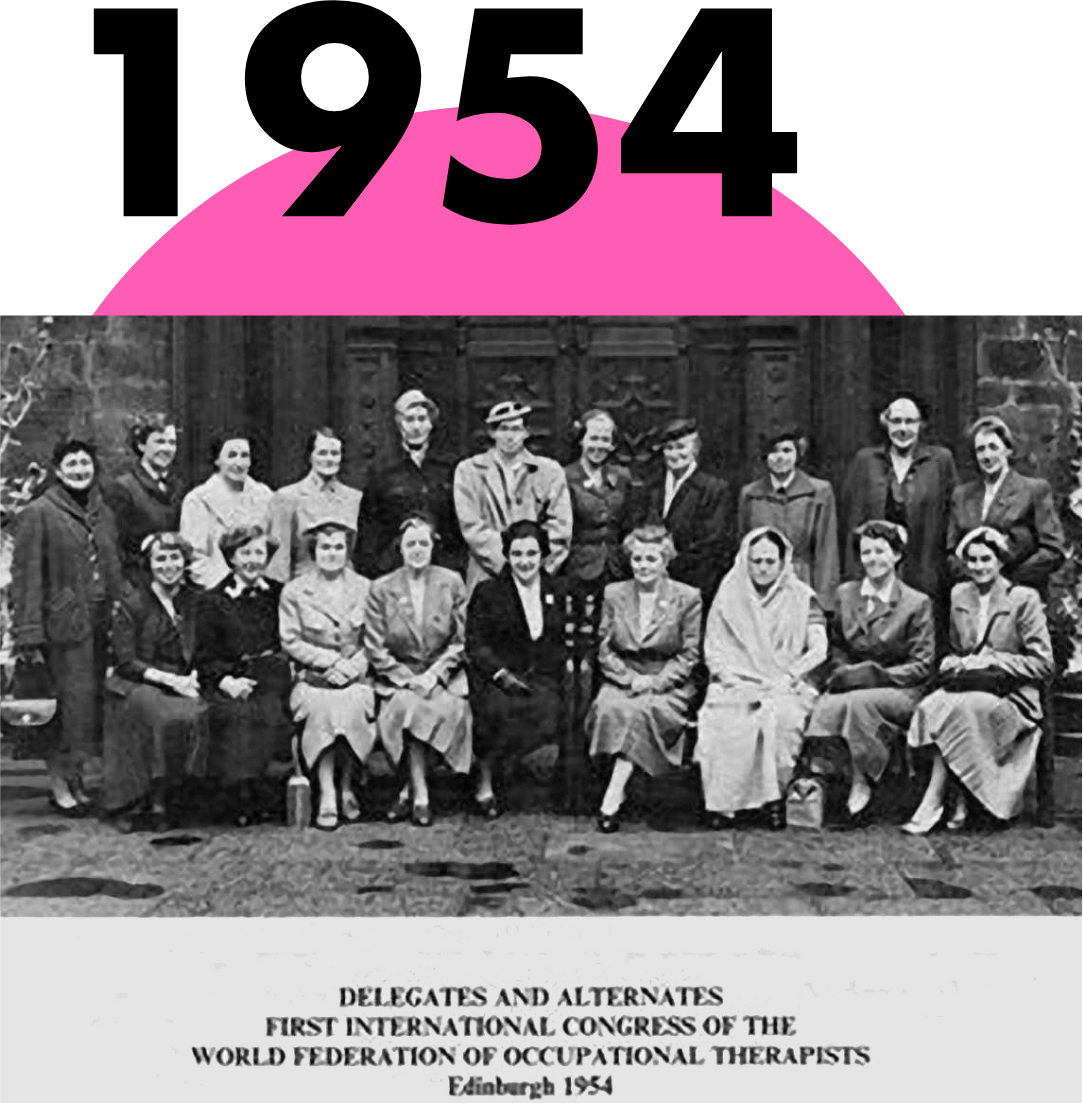
Delegates at WFOT’s first International Congress included Thelma Cardwell and Helen P. LeVesconte.
CAOT delegates participated in the first WFOT International Congress, which was held in Edinburgh, Scotland, with approximately 400 participants attending the inaugural event. The Congress served as a key educational event for occupational therapists, with topics reflecting the medical and professional landscape of the time, such as tuberculosis, poliomyelitis, and orthopaedics.
REFERENCE: aterson CF. The First International Congress of the World Federation of Occupational Therapists — Edinburgh, 1954. British Journal of Occupational Therapy. 1994;57(4):116-120. doi:10.1177/030802269405700402

Université de Montréal students in 1954.
McGill introduced Canada's first BSc program in Physical & Occupational Therapy, together with separate diploma programs in Physical Therapy and in Occupational Therapy, and CAOT’s annual Conference was held in Montréal for the first time.
REFERENCE: McGill University. (2025). The History of Rehabilitation at McGill. Retrieved from mcgill.ca: https://www.mcgill.ca/spot/about/history
The Université de Montréal founded its occupational therapy program that same year, which was initially named the School of Physiotherapy and Occupational Therapy and affiliated with the Faculty of Medicine. Its founder, Gustave Gingras, served as its first director from 1954–1977. The school offered a combined three-year course in physiotherapy and occupational therapy.
REFERENCE: McGill University. (2025). The History of Rehabilitation at McGill. Retrieved from mcgill.ca: https://www.mcgill.ca/spot/about/history

The Saskatchewan Association of Occupational Therapists was formed. Originally intended to be for CAOT members only, there was discussion about allowing non-CAOT members to join as well.
REFERENCE: https://scotsk.ca/vision-2022/history
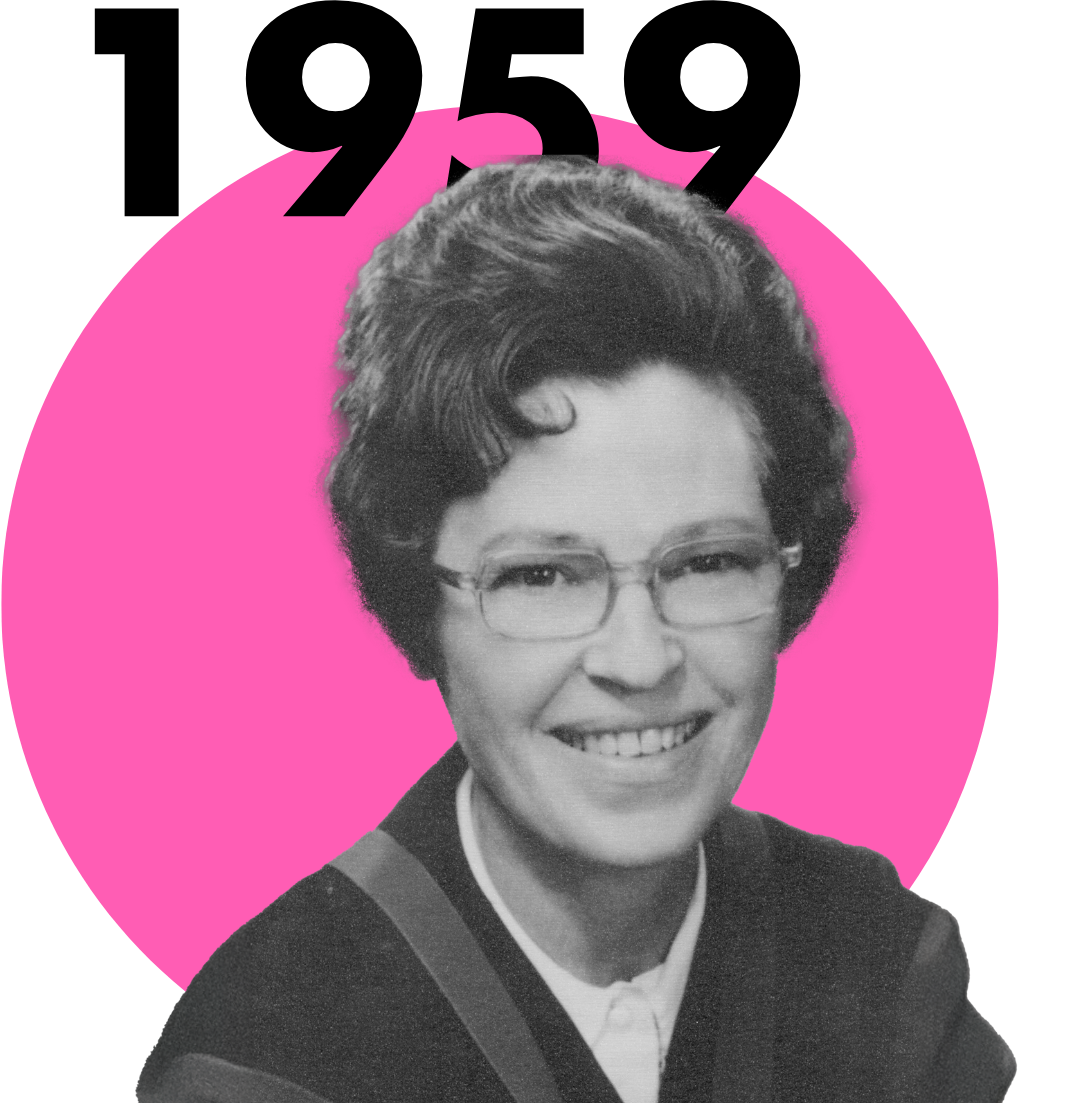
Muriel Driver
In a historic first for Canadian occupational therapy, CAOT's advanced standing "Special Course" became the first program in the country to accept male students. When the 18-month program launched in 1959 at Queen's University under the direction of Muriel Driver, at least 13 men enrolled during the first few years. The course had taken several years to plan and secure government funding before its launch.
REFERENCE: Ontario Society of Occupational Therapists. (2025). Era III - WWII - 1967. Retrieved from osot.on.ca: https://www.osot.on.ca/OSOT/About_Pages/History_Pages/Era_III-WWII-1967.aspx
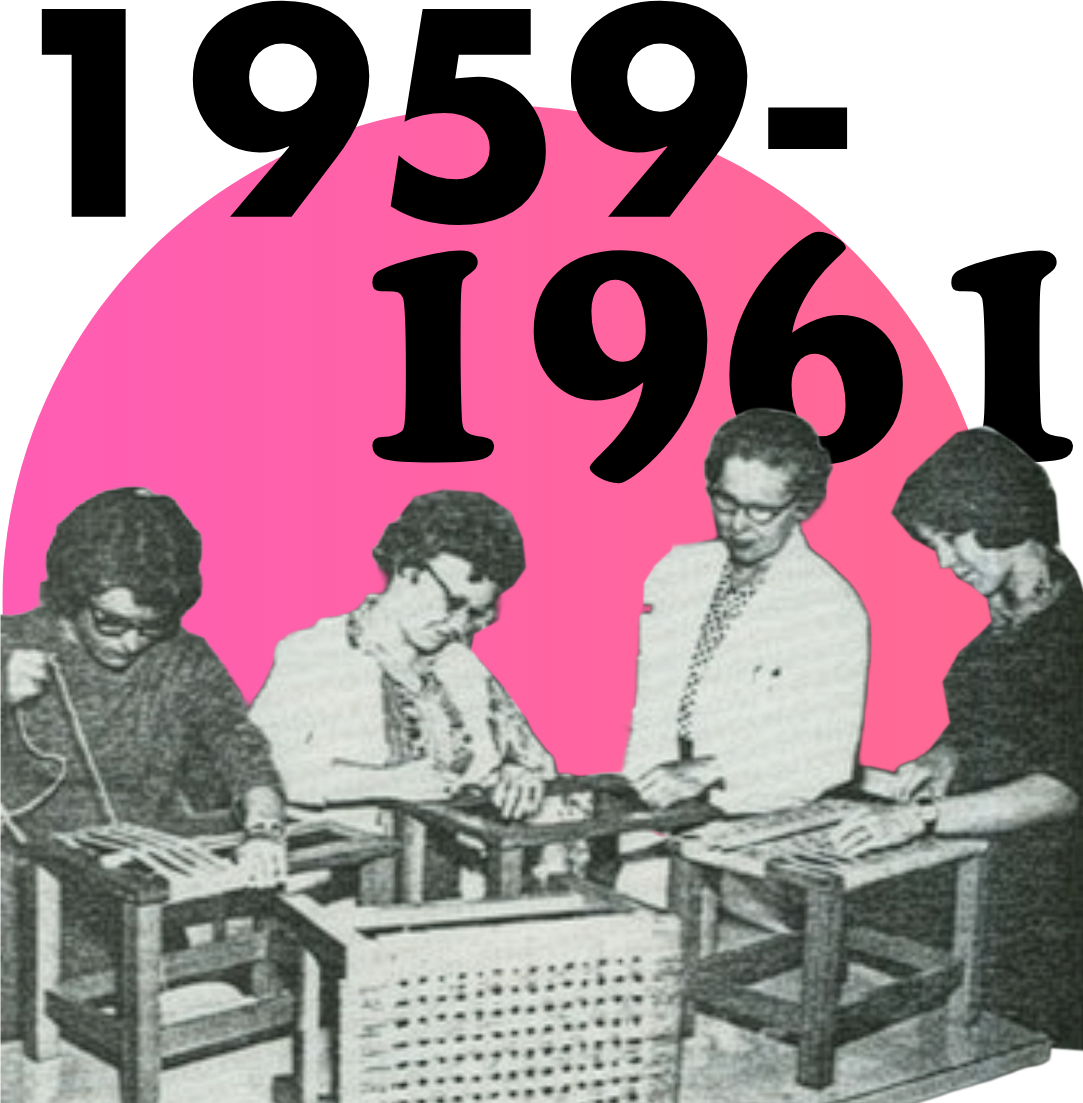
Occupational therapy programs were created across Western Canada, including the University of Manitoba in 1959, the University of Alberta in 1960, and the University of British Columbia in 1961. According to UBC, the need for schools to train OTs and PTs in Canada was urgent, since most people practicing in Canada were trained outside the country at the time.
REFERENCE: Ontario Society of Occupational Therapists. (2025). Era III - WWII - 1967. Retrieved from osot.on.ca: https://www.osot.on.ca/OSOT/About_Pages/History_Pages/Era_III-WWII-1967.aspx
OT students at UBC in the 1960s.

The combined occupational therapy and physiotherapy programs at l’Université de Montréal were separated into unique disciplines.
REFERENCE: L'Ordre des ergothérapeutes du Québec. (2024, décembre 3). Retour sur les festivités du 50e anniversaire de l'Ordre des ergothérapeutes du Québec. Retrieved from www.oeq.org: https://www.oeq.org/a-propos-de-l-ordre/salle-de-presse/actualites/284-retour-sur-les-festivites-du-50e-anniversaire-de-l-ordre-des-ergotherapeutes-du-quebec.html

CAOT’s name was changed to The Canadian Association of Occupational Therapists and its logo was altered in February 1963.
CAOT’s name was changed to The Canadian Association of Occupational Therapists and its logo altered in February 1963. Historical documents don't cite a reason for the name change from "Therapy" to "Therapists,” but this period marked a significant organizational transition and likely reflected an important evolution in how the profession viewed itself, placing greater emphasis on the practitioners rather than just the practice. The revision of the constitution in 1963 not only coincided with the name change but also enabled CAOT to award Life Memberships for the first time to honour OTs who had made outstanding contributions to the profession, assumed responsibilities beyond their formal duties, advanced the field, and had at least 20 years of practice with active CAOT membership.
REFERENCE: Cockburn, L. (2001). The professional era – CAOT in the 1950’s & 1960’s. Occupational Therapy Now, 5-9. https://caot.ca/document/4015/jan_OTNowJan16.pdf
1964
QSOT changed its name thanks to the involvement of the University of Montréal's graduates, which led to the Frenchification of the organization's name to the Societe des ergothérapeutes du Québec (SEQ).
REFERENCE: L'Ordre des ergothérapeutes du Québec. (2024, décembre 3). Retour sur les festivités du 50e anniversaire de l'Ordre des ergothérapeutes du Québec. Retrieved from www.oeq.org: https://www.oeq.org/a-propos-de-l-ordre/salle-de-presse/actualites/284-retour-sur-les-festivites-du-50e-anniversaire-de-l-ordre-des-ergotherapeutes-du-quebec.html
1964-1965
The Manitoba Society of Occupational Therapists (MSOT) was legally incorporated as a non-profit organization, and the annual CAOT Conference took place in Winnipeg for the first time in the province. The Saskatchewan Society of Occupational Therapy (SSOT), originally known as the Saskatchewan Association of Occupational Therapists, was incorporated under the Non-Profit Corporations Act the following year. The Newfoundland and Labrador Association of Occupational Therapists also began in the mid-1960s.
REFERENCE: https://msot.mb.ca/about-msot/ https://scotsk.ca/vision-2022/history https://scotsk.ca/vision-2022/history https://nlaot.ca/wp-content/uploads/2023/02/OT-HX-FOR-WEBSITE.pdf
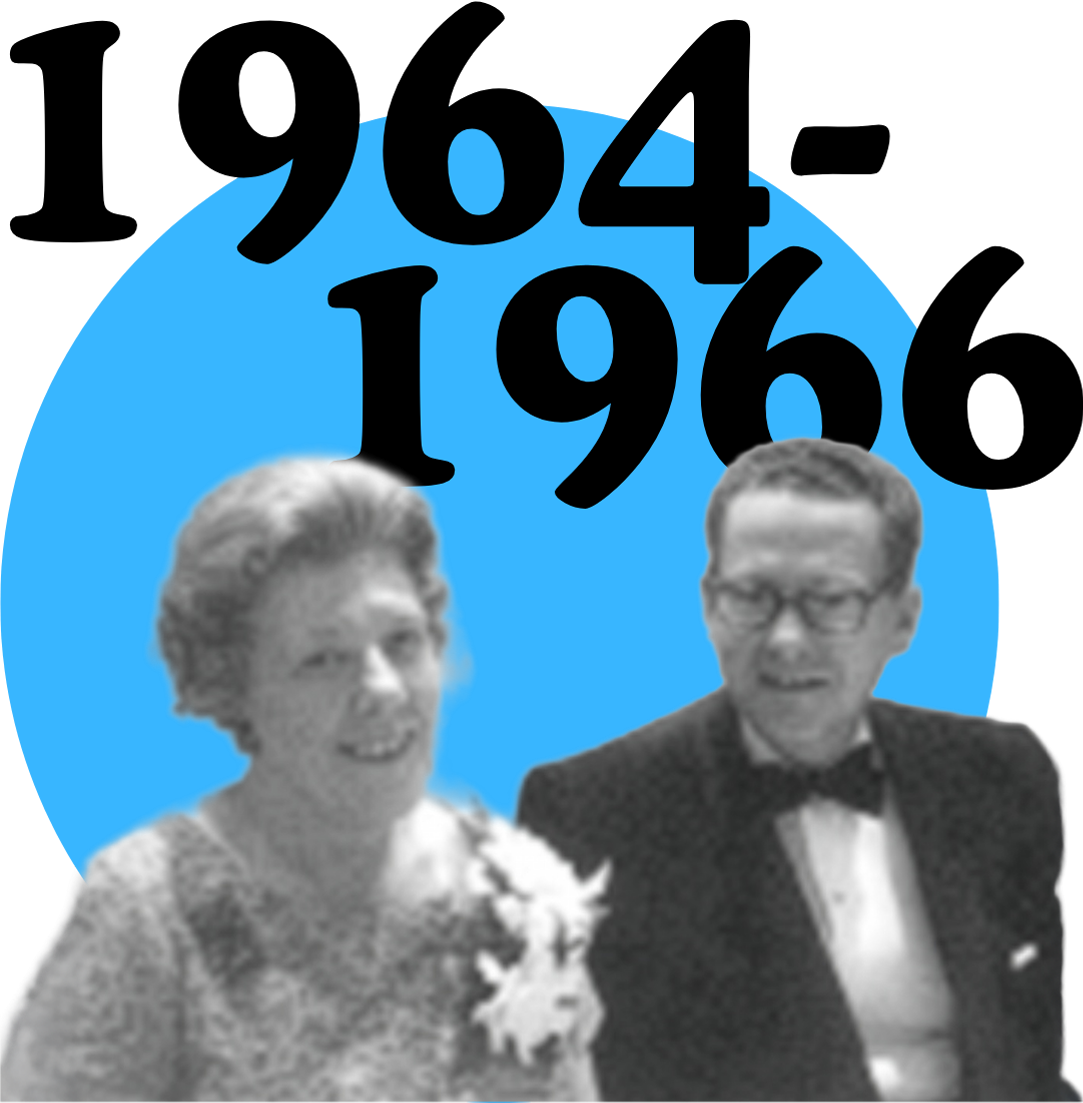
Ethel Smith and Dr. Norrie Swanson, CAOT’s President from 1960-1966, seen here at Ethel’s retirement party. She served as CAOT’s Executive Consultant and Secretary from 1939-1965.
1964
CAOT’s Executive Council of the Board of Management became the Board of Directors in 1964, signalling a modernization of its governance structure.
REFERENCE: Hood, M. (1967). World Federation of Occupational Therapists Newsletters. Canada. Canadian Journal of Occupational Therapy, 34, 124. https://caot.ca/document/8328/OTNow_05_01.pdf
1965
Ethel Smith, an OT, resigned after 26 years of service as Executive Consultant and Secretary. The following year, the CAOT offices moved to a modern office building on Bloor Street West in Toronto, which represented a "close to the early chapters in the history of occupational therapy," suggesting the organization was entering a new era of professional development.
REFERENCE: Hood, M. (1967). World Federation of Occupational Therapists Newsletters. Canada. Canadian Journal of Occupational Therapy, 34, 124. https://caot.ca/document/8328/OTNow_05_01.pdf

Thelma Cardwell was elected as CAOT’s President, marking a major milestone since she was the first occupational therapist and first non-physician to hold this position. This leadership change represented a significant shift toward professional autonomy and identity, reinforcing the earlier name change that emphasized the practitioners themselves. Thelma was also the first Canadian to serve as President of WFOT. Her term ran from 1968 to 1972.
REFERENCE: Friedland, J. (2001, May-June). In Memoriam Dr. Thelma Cardwell 1920-2001 . Occupational Therapy Now, pp. 3-4. https://caot.ca/document/8328/OTNow_05_01.pdf

An occupational therapy diploma program began at Queen’s University, replacing the "Special Course" that had been discontinued. The initial class at Queen's had 11 students, and at least 13 men enrolled in the first few years.
REFERENCE: Ontario Society of Occupational Therapists. (2025). Era III - WWII - 1967. Retrieved from osot.on.ca: https://www.osot.on.ca/OSOT/About_Pages/History_Pages/Era_III-WWII-1967.aspx
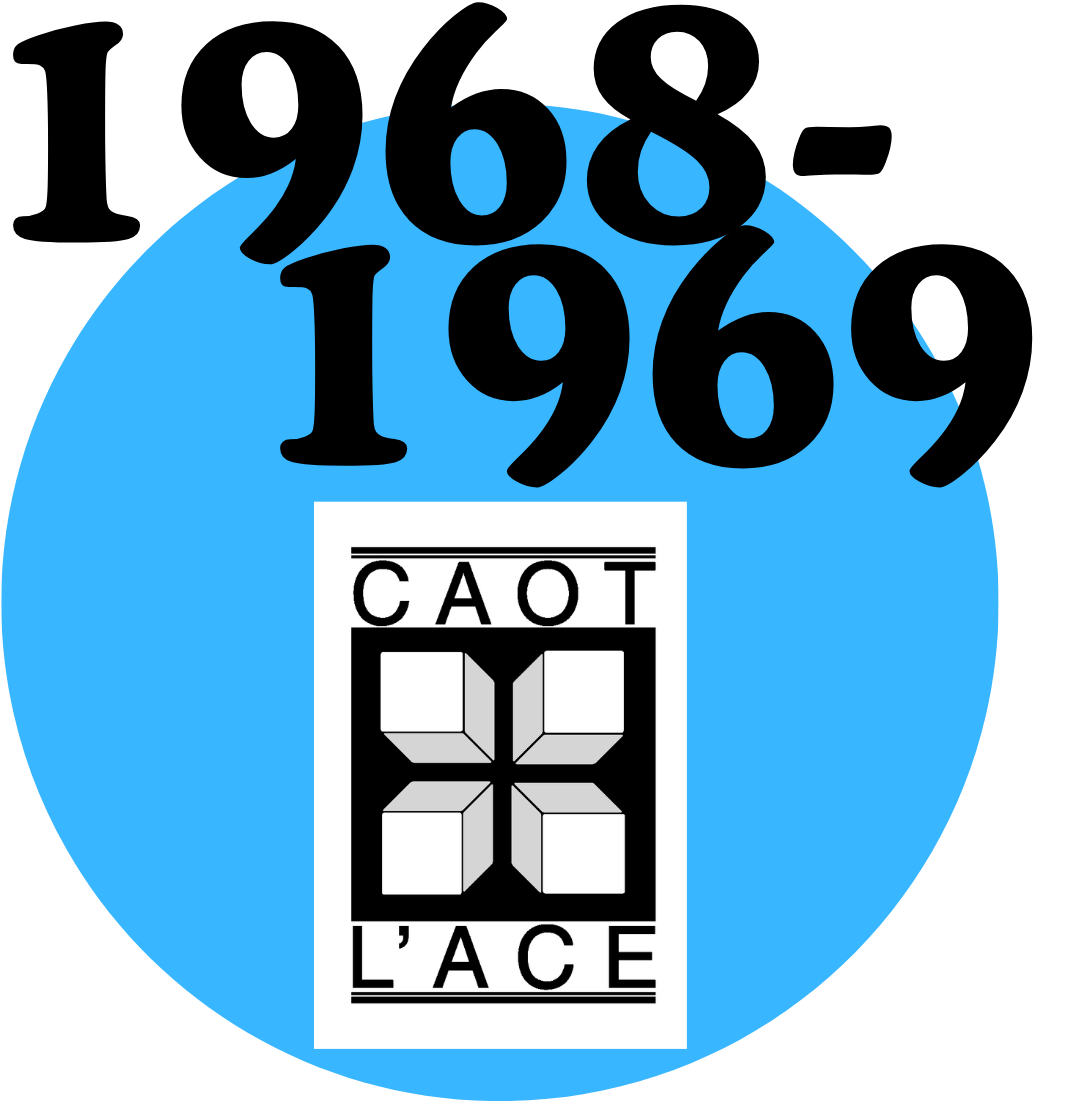
The CAOT/L’ACE logo was implemented in 1968.
1968
The occupational therapy program at the Université Laval began.
REFERENCE: Cockburn, L. (2001). The professional era – CAOT in the 1950’s & 1960’s. Occupational Therapy Now, 5-9. https://caot.ca/document/4015/jan_OTNowJan16.pdf
CAOT’s name and logo were changed to incorporate "L'ACE," the abbreviation for l'Association canadienne des ergothérapeutes, to signify the organization’s commitment to bilingualism.
REFERENCE: Cockburn, L. (2001). The professional era – CAOT in the 1950’s & 1960’s. Occupational Therapy Now, 5-9. https://caot.ca/document/4015/jan_OTNowJan16.pdf
1969
New college-level rehabilitation technician programs were implemented in Québec, and training programs for various mental health workers were developed in Ontario after a new Canadian community college system was created to provide a non-degree option for post-secondary education.
REFERENCE: Maxwell, J.D., & Maxwell, M.P. (1978). Occupational therapy: The profession. The final report of the Queen’s University study of occupational therapy (Project # 606-1242-46, Health and Welfare Canada). Kingston, ON: Queen’s University Press.

The Occupational Therapy Program at the University of Western Ontario began development under the auspices of the Medical Rehabilitation Program. Twenty students began the first year of the four-year Baccalaureate program in September 1971, while approximately nine students were admitted directly to the second year of the new program because they had already completed basic science courses.
REFERENCE: Bocking, D. (1970). Faculty of medicine report of the dean 1970-1971). In The University of Western Ontario Report of the President (pp.59). London, ON: The University of Western Ontario https://www.uwo.ca/fhs/ot/files/history.pdf

1971
The Kingston OTA program was terminated because of "the decline in in-patient [psychiatric] populations... the reorganization of treatment programs...[and] federal training grants were no longer available.” The need no longer appeared to exist since hospital-based education programs throughout the province were being relocated to community colleges.
REFERENCE: Maxwell, J.D., & Maxwell, M.P. (1978). Occupational therapy: The profession. The final report of the Queen’s University study of occupational therapy (Project # 606-1242-46, Health and Welfare Canada). Kingston, ON: Queen’s University Press.
1972
The combined occupational therapy and physiotherapy programs at the University of McGill separated into unique disciplines. At CAOT, the title of Chief Staff Officer was changed to Executive Director.
REFERENCE: L'Ordre des ergothérapeutes du Québec. (2024, décembre 3). Retour sur les festivités du 50e anniversaire de l'Ordre des ergothérapeutes du Québec. Retrieved from www.oeq.org: https://www.oeq.org/a-propos-de-l-ordre/salle-de-presse/actualites/284-retour-sur-les-festivites-du-50e-anniversaire-de-l-ordre-des-ergotherapeutes-du-quebec.html
At CAOT, the title of Chief Staff Officer was changed to Executive Director.
REFERENCE: Craik, J. (2016). Happy 90th anniversary CAOT! Retrieved from www.caot.ca: https://caot.ca/document/4015/jan_OTNowJan16.pdf
1973
The SEQ became the Professional Corporation of Occupational Therapists of Québec (CPEQ).
REFERENCE: L'Ordre des ergothérapeutes du Québec. (2024, décembre 3). Retour sur les festivités du 50e anniversaire de l'Ordre des ergothérapeutes du Québec. Retrieved from www.oeq.org: https://www.oeq.org/a-propos-de-l-ordre/salle-de-presse/actualites/284-retour-sur-les-festivites-du-50e-anniversaire-de-l-ordre-des-ergotherapeutes-du-quebec.html
The PEI Association Occupational Therapy Society (PEIOTS) was created.
REFERENCE: https://www.peiot.org/pei-ot-history

Joy Bassett, the first recipient of the Muriel Driver Memorial Lectureship.
E. Sharon Britnell was the first Alberta OT to join CAOT’s Board of Directors. She became Board President from 1978 to 1979 and Secretary of the Board in 1986.
A landmark organizational review led to a defining shift in how CAOT represented its members: the formation of the first truly National Board of Directors. Previously, most Board Directors had come from Ontario by default, with provinces contributing through representatives rather than direct board seats. The new structure ensured Directors from every province attended all board meetings, a change significant enough that meeting frequency shifted from monthly to three times a year to accommodate travel. Two years later, Anne Gaylard of Ottawa became the first CAOT president to reside outside Toronto, and in her inaugural address she expressed hope that future leaders would come from all across Canada. It was a decade of growing recognition that a national association needed to look and lead like one.
REFERENCE: (Cockburn, 2001)
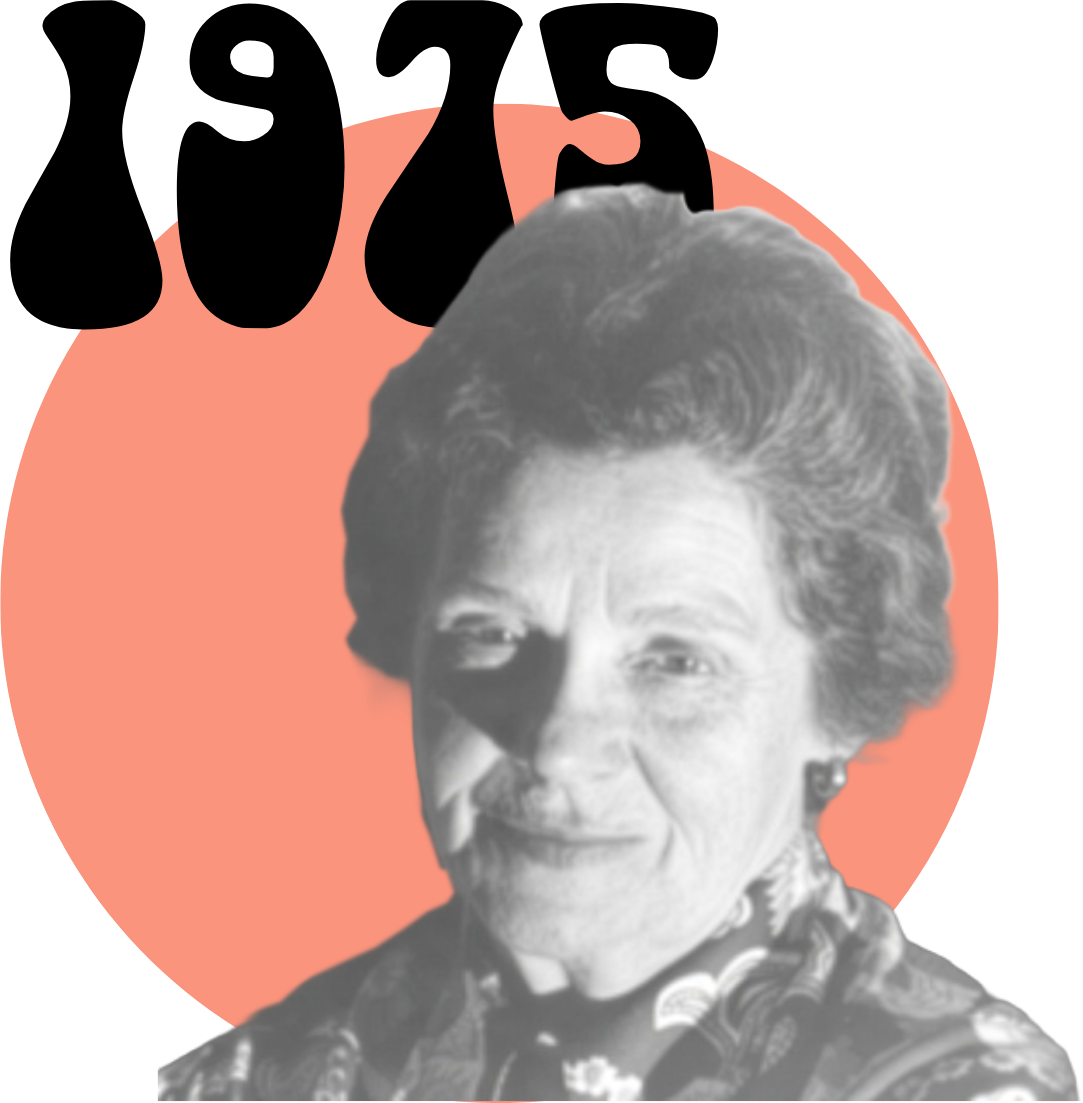
Joy Bassett, the first recipient of the Muriel Driver Memorial Lectureship.
The Muriel Driver Memorial Lectureship was established as a memorial to Muriel Driver in honour of her many significant contributions to the profession of occupational therapy, from the time of her graduation from the University of Toronto’s occupational therapy program in 1941 until her death in 1972. The first recipient was Joy Bassett.
REFERENCE: Canadian Association of Occupational Therapists. (2025). CAOT Awards. Retrieved from caot: https://caot.ca/document/7867/MD%20about.pdf

Halifax was the host city of the annual CAOT Conference, marking the first time that the largest annual gathering of the occupational therapy profession took place in Nova Scotia.
REFERENCE: (Maxwell, 1977)
A national survey of OTs, physicians, and administrators was conducted for CAOT by James and Mary Maxwell at Queen’s University, which found support for occupational therapy assistants. Called “Occupational Therapy: The Diffident Profession” and informally known as the "Maxwell Report," the study examined occupational therapy work environments, education, and personnel roles to understand the direction and future of the profession. The report identified three support personnel levels (aide, technician, assistant) but found little support for aides and technicians, while assistants received a more favourable reception despite inconsistent training. Survey respondents supported formal community college training for assistants, along with certification exams, CAOT membership, generalist programs, and nationally standardized training across Canada.
REFERENCE: Maxwell, J. A. (1977). The Queen's University Study of Occupational Therapy: Some reflections and conclusions. Canadian Journal of Occupational Therapy, 97-103.
CJOT introduced a new, larger format and a significant increase in advertising rates to address concerns about improved communication and more businesslike approaches. These changes led to the hiring of a part-time editor, Rosalie Kupfer-Halstuch, and the separation of CJOT’s finances from CAOT’s operating budget.
REFERENCE: (O'Shea, 1977)

1978
The annual Conference took place in Edmonton, marking the first time that the association's flagship event was held in Alberta.
REFERENCE: CAOT files
1979
CAOT brought together a National Task Force on the Skills Requirements of an Occupational Therapist, one of the first initiatives to formally identify the essential competencies of occupational therapy practitioners. The task force, which included recent graduates alongside experienced professionals, ensured diverse perspectives, laid the foundation for what would eventually become the Profile of Practice.
REFERENCE: ((Australia), 2014)
CJOT increased its publication from four issues to five, along with more articles and other sections being published or translated into French. CAOT also convened a symposium of more than 70 OTs from across Canada in Toronto to identify and discuss issues of significance to prepare for the next stage in the association’s development.
REFERENCE: (Cockburn, 2001) (Brintnell, 1979)

Dr. Andrée Forget, WFOT President from 1980-1986
Dr. Andrée Forget began serving as WFOT President for a term that lasted until 1986, and CAOT moved its national office to a larger space at 25 Imperial St. in Toronto. It had a small staff with an executive director, an executive assistant, and a clerk-receptionist.
REFERENCE: (Therapy, 2025) (Wilkins, 1980)
PHOTO: CAOT files

Pat McKee
Pat McKee, an OT and a singer/songwriter, wrote and performed Canada’s official song for the International Year of Disabled Persons. Called “Look Beyond,” it eloquently voiced the values of the profession in the lyrics. Now an associate professor emeritus at the University of Toronto and a CAOT Lifetime member, Pat’s song was used more recently in an audio-visual production in 2013 to convince the U.S. to ratify the Convention on the Rights of Persons with Disabilities.
REFERENCE: (Cockburn, 2001)

1982
Dalhousie University opened the Atlantic School of Occupational Therapy, located within the Faculty of Health. The regional orientation of the school fostered collaborative teaching, research, and professional activities to link those at the university with service providers, government workers, related disciplines, and citizens in the four Atlantic Provinces.
REFERENCE: (About, 2025)
1983
CAOT initiated the establishment of the Canadian Occupational Therapy Foundation/Fondation canadienne d'ergothérapie on May 17, 1983, after recognizing the profession's need to provide financial support for scientific endeavours and generate funds for this purpose. The foundation was spearheaded by OT Karen Goldenberg, who became the first President of COTF’s Board of Governors, and co-founded by Thelma Cardwell, who served as Vice-President from 1983 to 1985. COTF was incorporated under Letters Patent by the Minister of Consumer and Corporate Affairs of Canada and received its charitable registration number in October 1983.
REFERENCE: (Trentham, 2001)
1984
Saskatoon welcomed the annual Conference, CAOT's flagship event, bringing together the occupational therapy profession for the first time in Saskatchewan.
REFERENCE: CAOT files

The first Canadian graduate program in Rehabilitation Science began at McGill University.
REFERENCE: (Therapists, CAOT membership data 1989, 1990)
Canada’s first MScOT program began at the University of Alberta in 1986. By the end of the decade, there were 63 CAOT members who had either completed or were pursuing doctorate degrees, and 473 members were enrolled in or were pursuing Master’s degrees (CAOT, 1990).
REFERENCE: (Therapists, CAOT membership data 1989, 1990)

Funeral march at the 1985 CAOT Conference – burying diffidence.
A symbolic "funeral march" took place at the CAOT Conference in Kingston, Ontario, to lay to rest the idea of the profession’s “diffidence” or lack of self-confidence following push-back from the Maxwell Report. This powerful ceremonial act marked a turning point, signalling the end of an era of professional hesitancy and the birth of a more assertive, confident occupational therapy identity. The event was part of CAOT's broader strategic initiative to strengthen professional structures and amplify occupational therapy's voice in shaping national health and social services policy.
REFERENCE: (Trentham, 2001)

The first National Certification Examination (NCE) was administered on July 7, 1986, marking a pivotal moment in Canadian occupational therapy after three decades of development. This inaugural, national examination was offered in both English and French, establishing a common standard for entry-level competency requirements across the country.
REFERENCE: (Trentham, 2001)
CAOT partnered with the Canadian Physiotherapy Association (CPA) and Canadian Association of Speech Language Pathology and Audiology (SAC) to examine support personnel roles, training, and usage, with Health and Welfare Canada subsequently funding their tri-association working group.
REFERENCE: (Salvatori, 2001)
The occupational therapy program at the University of Ottawa began as part of its Faculty of Health Sciences.
REFERENCE: (History of the Faculty of Medicine, 2025)
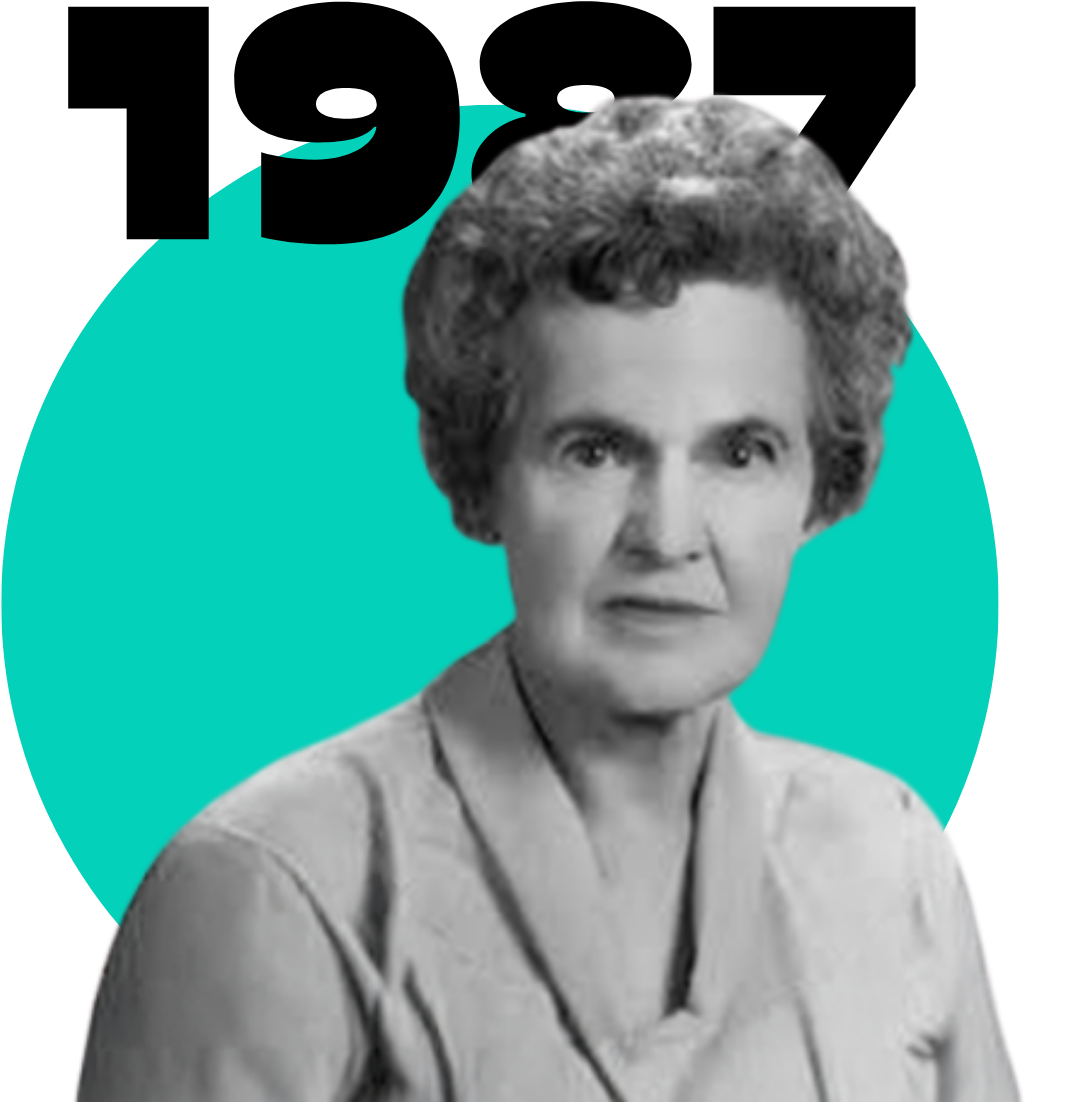
Helen P. LeVesconte was a trailblazing OT and graduate of the University of Toronto's first OT class in 1928 who was a dedicated educator, clinician, and advocate.
The Dr. Helen P. LeVesconte Award for Volunteerism was established in her memory to honour a member who has made an exceptional contribution to the profession of occupational therapy through volunteering with the association. Helen was a groundbreaking figure in Canadian occupational therapy. She graduated from the first class at the University of Toronto in 1928 and served as the Director of the occupational therapy program at U of T from 1933 to 1963. She also wrote an early history document and had several articles published in CJOT. The first award recipient was Barbara Quinn in 1987.
REFERENCE: (Therapists, CAOT Awards: Dr. Helen P. LeVesconte Award for Volunteerism with the Canadian Association of Occupational Therapists , 2025)
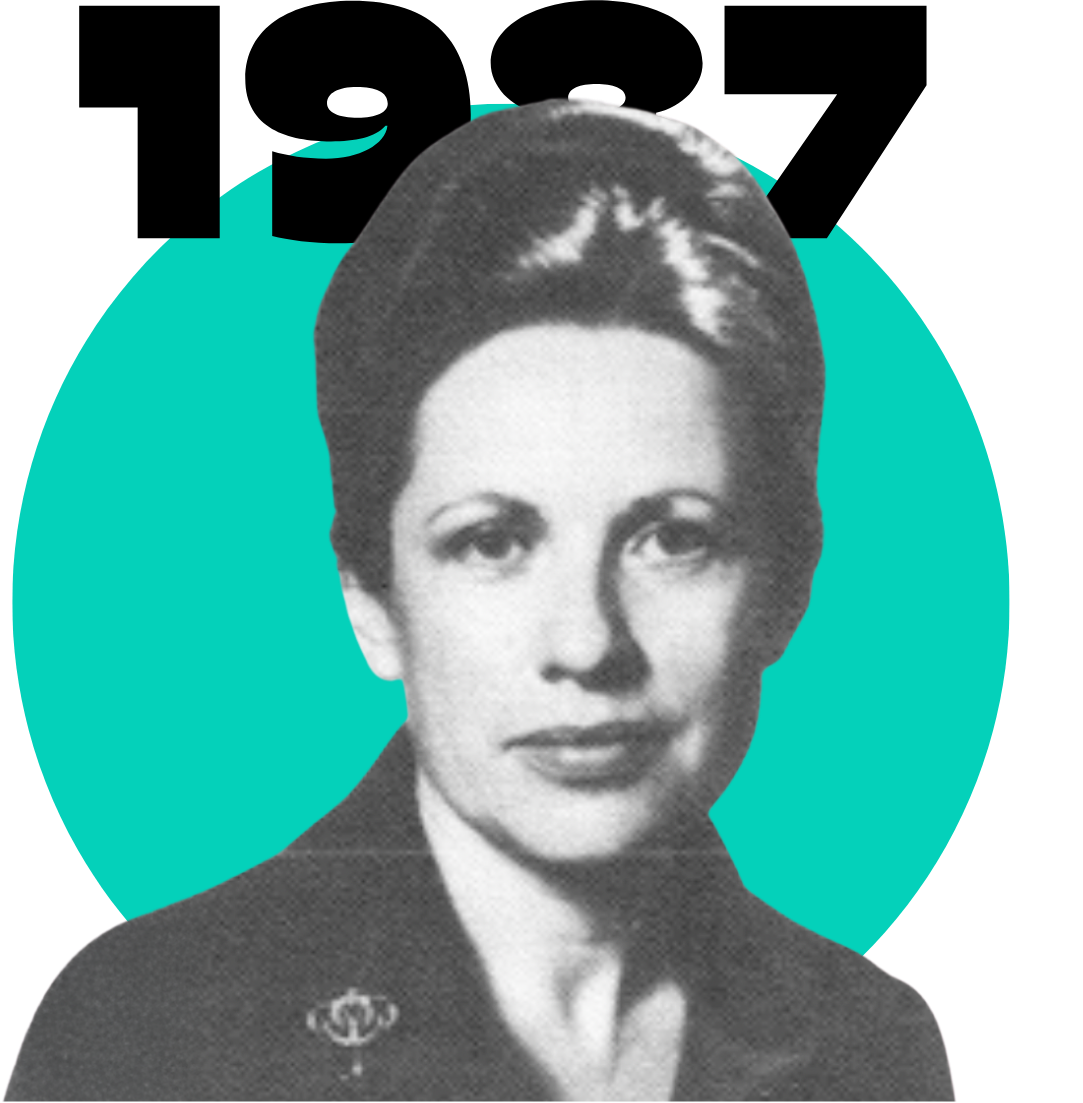
National OT Week was established for the first time as an important public relations activity for all members, and a major restructuring of CAOT took place under the direction of CAOT President Helen Madill (1986-1988). Committees were organized into divisions which included: Professional Representation, Credentialing, Professional Promotion, Professional Education, Standards, and Resource Management.
REFERENCE: (Gill, 1988) (Trentham, 2001)
For the first time, Saint John hosted the annual Conference, bringing the largest annual gathering of occupational therapists in Canada to New Brunswick.
REFERENCE: CAOT files
Helen M. Madill, Ph.D., C. Psych., O.T.(C), President CAOT (1986-1988

The team behind the 1988 development of an occupational performance outcome measure, a landmark collaboration funded by the National Health Research Development Program and the Canadian Occupational Therapy Foundation.
A project to develop an occupational performance outcome
measure was launched and co-funded by the National Health Research Development Program and the Canadian Occupational Therapy Foundation. The tool was designed to assess self-care, productivity, and leisure performance while considering client environment, development, roles, and motivation. It needed to be clinically sensitive, diagnosis-neutral, user-friendly, numerically scorable, and psychometrically sound (reliable, responsive, valid).
REFERENCE: (History, 2025)
The Association of Canadian Occupational Therapy University Programs (ACOTUP) was established following a work session in May 1988 to discuss the current state and needs of occupational therapy research in Canada.
REFERENCE: (Helene Polatajko, 1989)
The New Brunswick Association of Occupational Therapists (NBAOT) was created.
REFERENCE: https://www.canlii.org/fr/nb/legis/loisa/ln-b-1988-c-76/derniere/ln-b-1988-c-76.html

CAOT’s membership had increased by more than 329% since 1980, from 973 to 4,569 members. Its national office staff had also grown from three to 11 people with its executive directors – Seanne Wilkins (1979-1982), Anne Larson (1983-1984), and Margaret Brockett (1985-1991), dividing their time between membership and fieldwork issues with the important job of promoting the profession.
REFERENCE: (Trentham, 2001)
CAOT published a discussion paper with CPA and SAC that established key consensus points about support personnel. It included encouraging maximal use of support personnel under direct professional supervision, excluding assistants from activities like assessments and treatment planning, supporting on-the-job training over formal programs, opposing new providers that significantly overlap with existing personnel, and calling for formal evaluation of service delivery models. While recognizing that support personnel could expand services and reduce costs, the working group expressed concerns about consumer safety, role conflicts, care quality, legal implications, supervision demands, and limited employment prospects for assistants, ultimately recommending further study of these complex issues.
REFERENCE: (Salvatori, 2001)
The Association of Canadian Occupational Therapy Regulatory Organizations (ACOTRO) was established in 1989 and incorporated in 2011 as a collaborative organization for the provincial and territorial regulatory bodies of OTs in Canada.
REFERENCE: (Annual Report 2017 Who We Are, 2017)

The Occupational Therapist Assistant program was launched as a 10-month certificate program at Okanagan College in Kelowna, BC. McMaster University also received the first students into its occupational therapy program, bringing the total number of occupational therapy educational programs in Canada to 12.
REFERENCE: (Salvatori, 2001) (Westmorland, 1996)
CAOT received $1.25 million in funding for the creation of the Seniors Health Promotion Project, “Responding to the Challenge of Aging Population,” from the federal government’s Seniors Independence Program of Health & Welfare Canada. The goal of the 30-month national project was to reorient OTs to a new vision of health and assist in the promotion of health and independence of older Canadians. Two pilot sites were in St. John’s, Newfoundland, and Winnipeg, Manitoba.
REFERENCE: (Therapists, 1993)

COPM authors Nancy Pollock, Mary Ann McColl, Helene Polatajko, Sue Baptiste, and Mary Law join CAOT Director Anne Strickland (far right). Missing: Author Anne Carswell
CAOT published the first edition of the Canadian Occupational Performance Measure (COPM), and then it was launched at the Clarke Institute in Toronto, Ontario, in 1992. Its authors include Sue Baptiste, Anne Carswell, May Law, Mary Ann McColl, Helene Polatajko, and Nancy Pollock. The COPM uses a unique, individualized approach to enable persons to identify everyday activities that they wanted, needed, or were expected to do but were having challenges in doing. The COPM measures change in performance and satisfaction in these activities over time.
REFERENCE: (History, 2025) (Mary Clark Green, 2001)
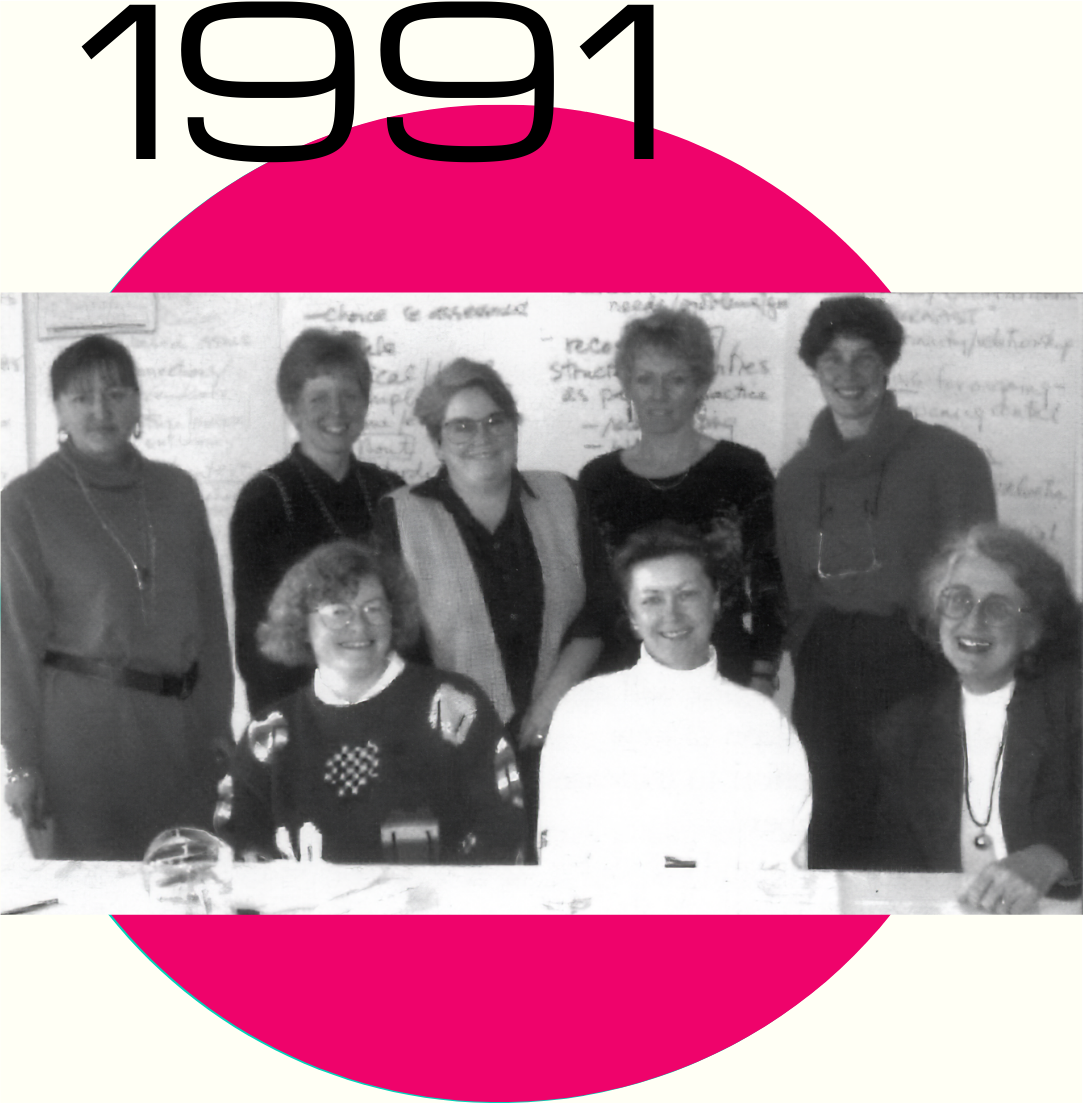
The Occupational Therapy Guidelines for Client-Centred Practice was published, representing a landmark consolidation of earlier work by Canadian occupational therapy task forces. It brought together three previously separate documents: the Guidelines for the Client-Centred Practice of Occupational Therapy, Intervention Guidelines for the Client-Centred Practice of Occupational Therapy, and Toward Outcome Measures in Occupational Therapy.
REFERENCE: (Trentham, 2001)
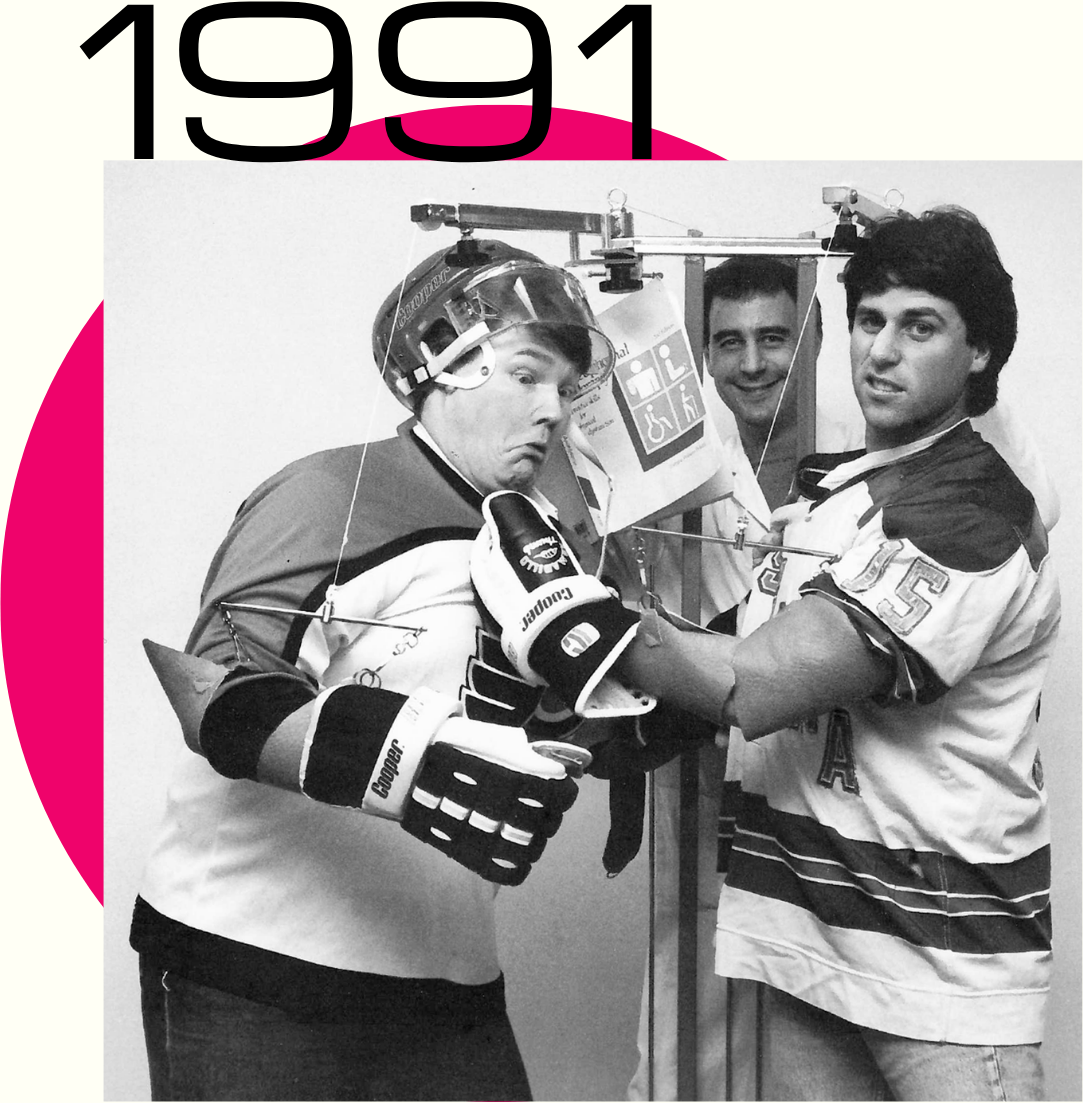
Who says occupational therapy can't have a sense of humour? Vancouver-based male occupational therapists posed for a tongue-in-cheek calendar that put occupational therapy in the spotlight — and brought the laughs. Equal parts cheeky and charitable, the calendar featured local OTs in playful, irreverent scenarios, with the tagline on the back cover delivering the final wink: "Occupational Therapy: A Great Profession for Men." All proceeds from calendar sales went directly to the Canadian Occupational Therapy Foundation (COTF), turning a good laugh into meaningful support for OT research and scholarships.
REFERENCE: (The Vancouver Men of OT Present...The Men of Occupational Therapy Calendar, 1991)
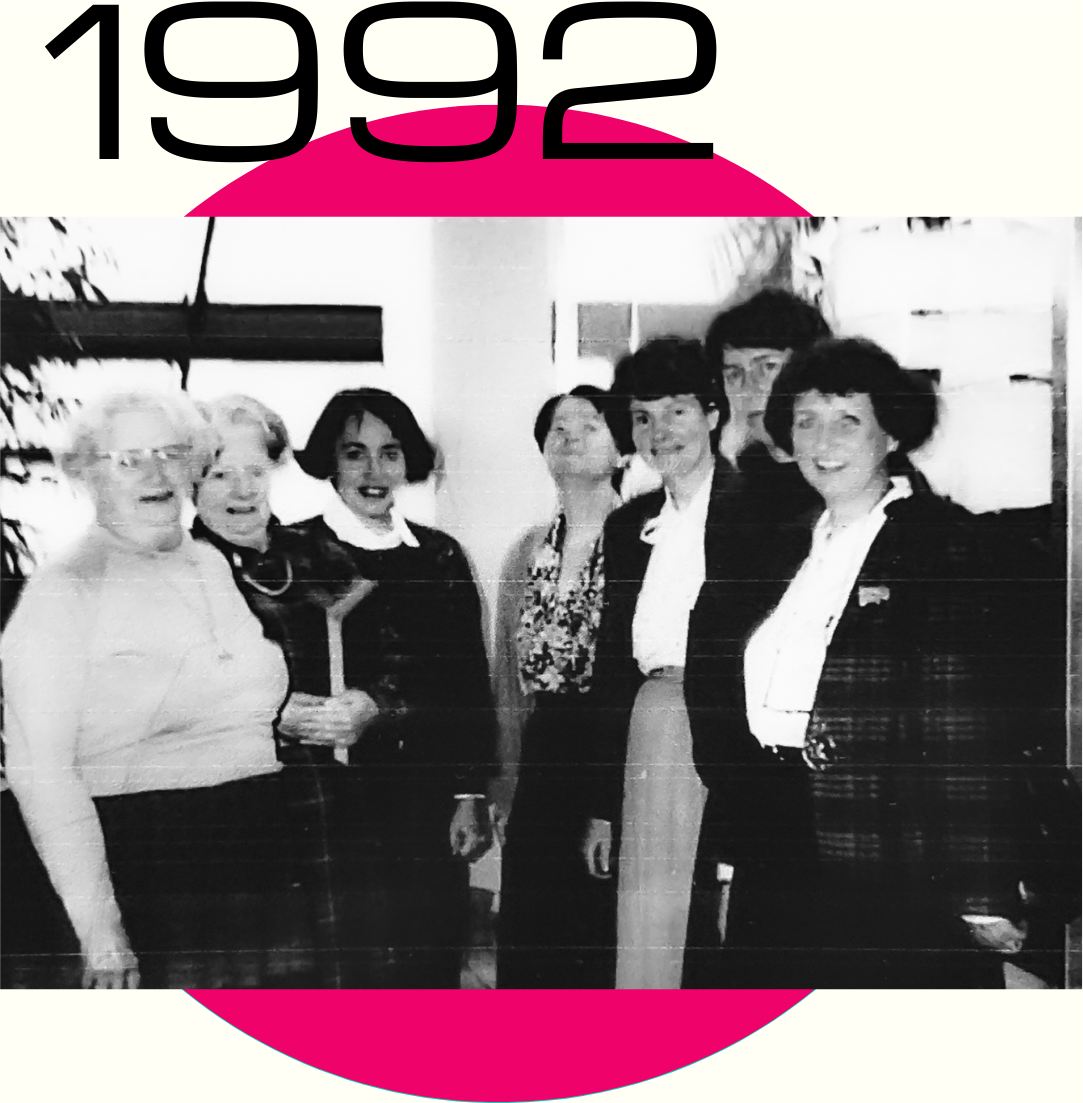
OTs connect during a break at the joint conference, which brought national and regional programming to Newfoundland for the first time.
A part-time OTA program began at Humber College in Toronto, Ontario, for those already in the workforce, and a full-time program was implemented the next year, following Ministry approval and funding.
REFERENCE: (Salvatori, 2001)
The CAOT and OT Atlantic conference was held in St. John’s, Newfoundland, for the first time.
REFERENCE: https://nlaot.ca/occupational-therapy/our-history/

CAOT collaborated with the Association of Canadian Occupational Therapy University Programs (ACOTUP), the provincial/territorial associations, and regulatory bodies to respond to Role and Use of Support Personnel in the Rehabilitation Disciplines, a report by University of Alberta investigators. CAOT supported three levels of support personnel while maintaining OTs' ultimate accountability for service delivery. The association opposed certain proposed duties that required professional judgment (standardized screening, progress communication, routine splinting) and favoured on-the-job training over formal programs. CAOT agreed to accept generic, one-year training without fieldwork or credentialing requirements.
REFERENCE: (Salvatori, 2001)

The Corporation professionnelle des ergothérapeutes du Québec (CPEC) becomes l’Ordre des ergothérapeutes du Québec (OEQ) following measures adopted by the Office des professions. OEQ's mission now includes protecting the interests of the public.
REFERENCE: (Québec, 2024) IMAGE: www.oeq.org
CAOT and the American Occupational Therapy Association (AOTA) hosted Cultural Connections, a Can-Am Conference held in Boston, which drew more than 7,000 OTs from the two countries. It resulted in increased collaboration between the two organizations, as well as the British and Irish occupational therapy associations.
REFERENCE: (Mary Clark Green, 2001)

CAOT convened a task force to review the relationship of occupational therapy support personnel to the association, which resulted in new guidelines for supervision, a revised position statement, and a compilation or toolkit of resource information on support personnel.
REFERENCE: (von Zweck, 1998)
CAOT’s national office moved from its shared space with the Canadian Occupational Therapy Foundation (COTF) in Toronto to Ottawa to allow for closer collaborations, networking, and lobbying with other national organizations and the federal government. CAOT rented space from Carleton University.
REFERENCE: (Mary Clark Green, 2001)

The initial Profile of Occupational Therapy Practice in Canada was published as a basis for developing academic standards for the profession, validating the blueprint for CAOT’s national exam, and as a self-assessment tool for individual members. The Profile was the result of a three-year partnership between CAOT and Human Resources Development Canada (HRDC) to develop a professional competency profile describing occupational therapy practice in Canada.
REFERENCE: (Mary Clark Green, 2001)
CAOT established CAOT Publications ACE as its official publishing house to enable independent publishing, manage author contracts, and generate additional revenue for association operations. CAOT’s Board passed a bilingual policy to ensure that all major documents by CAOT Publications Ace were available in both French and English.
REFERENCE: (Mary Clark Green, 2001)

A national conference entitled "Towards Developing a Flexible Health Workforce" was held in the fall, co-sponsored by CAOT. The conference emerged from the Integrated Health Human Resources Development (IHHRD) vision developed through a partnership between CAOT, the Canadian Dietetics Association, the Canadian Nurses Association, and the Canadian Physiotherapy Association.
REFERENCE: (Salvatori P. , 1997)
CAOT revised its Academic Accreditation Standards to address the expanded practice environment of OTs and the new teaching methods and philosophies appearing in the educational programs. The standards ensured consistent educational standards and public accountability, as well as international portability for Canadian-educated occupational therapists.
REFERENCE: (Taylor, 1996)
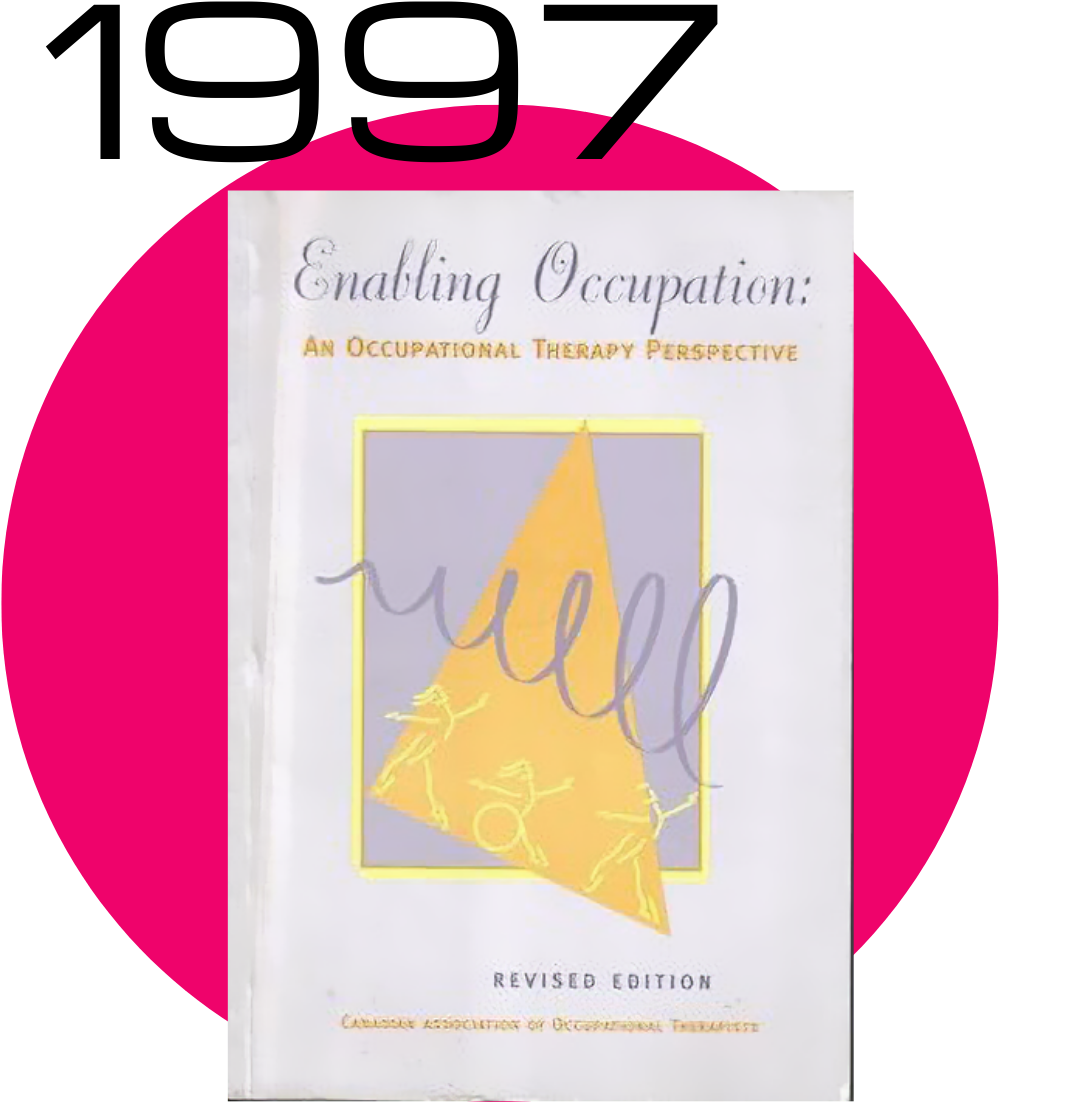
Enabling Occupation: An Occupational Therapy Perspective was published by CAOT in August 1997. Authored by Elizabeth Townsend, it introduced the Canadian Model of Occupational Performance (CMOP), placing "occupation" (everything people do to occupy themselves) at the forefront of occupational therapy. The publication was significant for guiding the development of occupational therapy documentation protocols and practice policies, with its impact extending internationally and being available in multiple languages.
REFERENCE: (Mary Clark Green, 2001)
CAOT produced the Guidelines for the Supervision of Assigned Occupational Therapy Service Components, along with a series of position statements following an increase in practice inquiries related to support personnel. CAOT outlined a three-step supervision process and endorsed dual or multidisciplinary training programs for support personnel, but recommended the identification of minimum competencies for occupational therapy support workers. Notably, CAOT revised its position to allow certain assessment procedures to be assigned to others if explicit criteria were provided.
REFERENCE: (Mary Clark Green, 2001) (Therapists, Guidelines for the supervision of assigned occupational therapy service components , 2000)

The Thelma Cardwell Annual Lecture Series at the University of Toronto was established under the leadership of Dr. Judith Friedland, by the friends and family of Thelma Cardwell, her professional colleagues, and the Canadian Occupational Therapy Foundation to honour one of occupational therapy’s most prestigious alumnae. Thelma’s accomplishments included being the first woman and first OT to serve as president of CAOT in 1966.
REFERENCE: (Thelma Cardwell Lecture, 2025)
CAOT and the Alzheimer Society of Canada received $141,000 from the 1996/1997 Health Canada New Horizons: Partners in Canada Project. Living at home with Alzheimer’s Disease and Related Dementias: A Manual of Resources, References and Information was one outcome of the project, which consisted of five pilot sites across Canada
REFERENCE: (Mary Clark Green, 2001)
Thelma Cardwell

CAOT’s website was launched, rapidly expanding to include webinars, workshops, online publications, practice resources, and discussion forums. The digital platform addressed continuing education needs for members in remote areas who couldn't travel to urban centres.
REFERENCE: (Mary Clark Green, 2001)
The University of Western Ontario began admitting students to the first Master’s entry-level occupational therapy program in Canada. Dalhousie University also started a Master’s program available completely by distance, allowing OTs to access a master’s level education regardless of their location.
REFERENCE: (Polatjko, 1999)
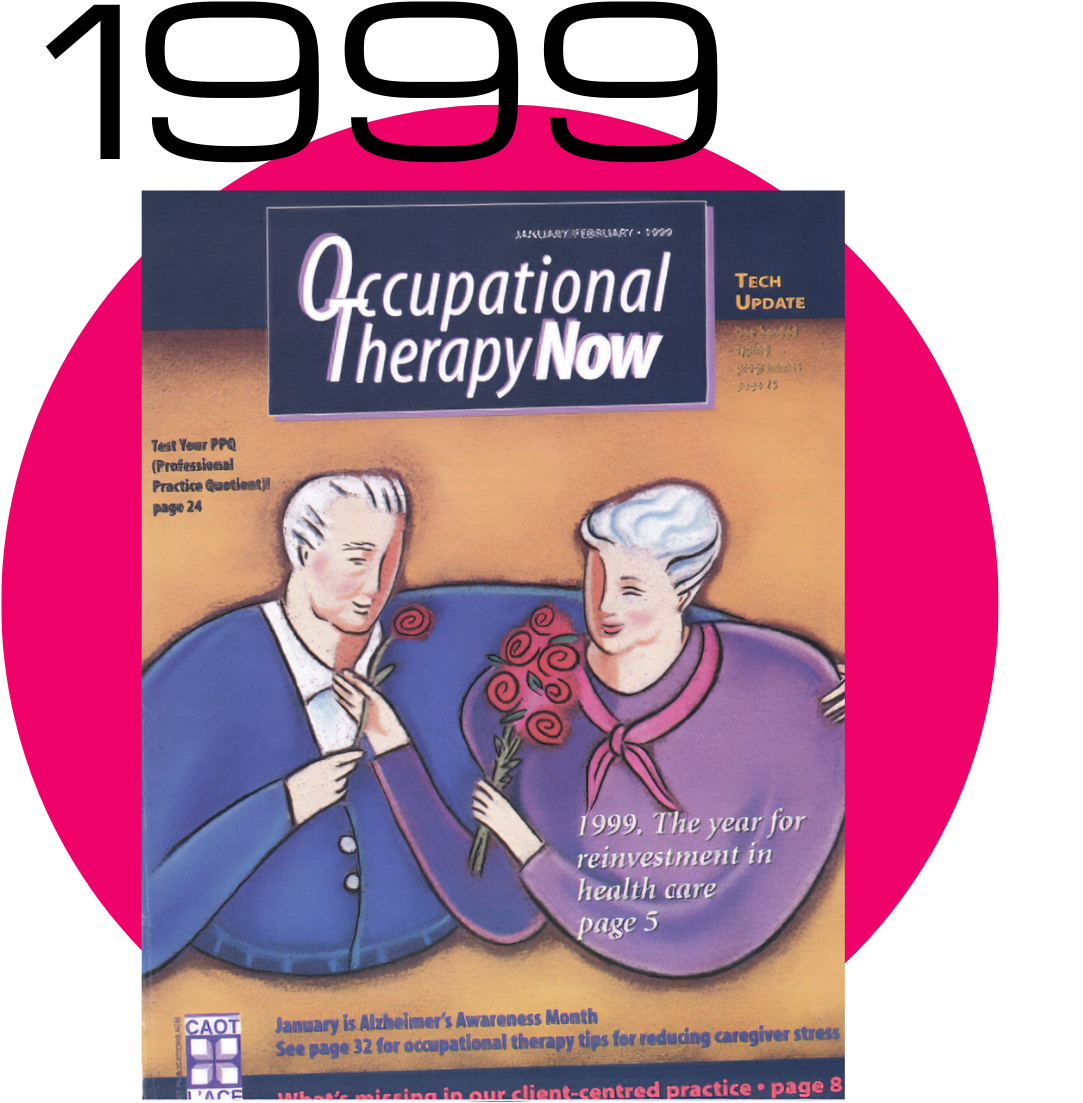
Occupational Therapy Now (OT Now), a practice-oriented magazine, replaced The National Newsletter in January. Available in print and online, OT Now represented the first major step towards bringing practice information to CAOT’s members via the Internet.
REFERENCE: (Mary Clark Green, 2001)

CAOT published a Support Personnel Toolkit containing resources on assistant roles, supervision, and training, listing 15 assistant training programs (12 dual/generic rehabilitation and three OT-specific). This toolkit defined different levels of support personnel competencies, from basic to broad-based, providing a framework for their knowledge, skills, and abilities within Canadian occupational therapy practice. With six of the programs in Ontario, the provincial Ministry developed program standards to facilitate approval, ensure graduate competency, and enhance career mobility. It ultimately approved the "occupational therapist assistant" title after addressing concerns by CAOT, OSOT, and COTO about graduate autonomy.
REFERENCE: (Salvatori, 2001)
CAOT partnered with the Association of Canadian Occupational Therapy University Programs (ACOTUP) to lead the Fieldwork Education Site Approval Program (FESAP). This innovative program was designed to ensure consistency among the many, varied fieldwork sites offered across Canada and to ensure that these sites provided a positive learning environment.
REFERENCE: (Forwell, 1999)
CAOT and Partners in Action (PAC) launched "Occupational Therapy: Skills for the Job of Living," a public awareness campaign targeting women aged 30-50 as key healthcare decision-makers for their families. The slogan, originally from the American Occupational Therapy Association and recommended by the Alberta Association of Registered Occupational Therapists, supported comprehensive promotional materials, media relations, insurance advocacy, and a dedicated website.
REFERENCE: (Mary Clark Green, 2001)

CAOT’s Board of Directors approved exemptions from the national certification exam requirement for OTs who had supervised students in accredited fieldwork placements or held faculty positions in CAOT-accredited occupational therapy education programs. This modified CAOT's longstanding policy of requiring successful completion of the certification exam as a membership criterion.
REFERENCE: (Therapists, Position statement on telehealth and tele-occupational therapy, 2000)
CAOT membership profiles demonstrated significant academic advancement as Master's degree holders increased from 5% in 1990 to 17.4% in 2000, and Doctorate degree holders rose from 0.03% in 1995 to 1.7% in 2000, reflecting the response by educational programs at Canadian universities to the profession's need for advanced training.
REFERENCE: (Mary Clark Green, 2001)

CAOT announced that it would only grant academic accreditation to those occupational therapy educational programs that lead to a professional master's degree in occupational therapy as the entry credential, effective as of 2008.
REFERENCE: (Highlights from the March 2002 Board meeting , 2002) )
The Society of Alberta Occupational Therapists (SAOT) was formed as a voluntary, non-regulatory body that provides networking and education opportunities for its members.
REFERENCE: (About, 2025)
The COTF team moved to CAOT’s National Office in Ottawa in the fall, which reflected a closer partnership between CAOT and COTF to focus on the promotion of research and scholarship in occupational therapy in Canada.
REFERENCE: (von Zweck, CAOT 2003-2004 midyear report, 2004)
CAOT unveiled a new logo with dramatic changes, including elements of red and blue, the Canadian maple leaf, and images of people interacting. This logo symbolized the dynamic relationship occupational therapists have with their clients as they enable occupation.
REFERENCE: (Craik, Happy 90th anniversary CAOT!, 2016)
The annual OT Week was expanded to the full month of October to allow greater flexibility in scheduling events and activities and promote greater exposure of the profession. The annual theme addressed workplace mental health, a leading cause of disability and productivity loss in Canada. A National OT Month Committee was established by CAOT to begin working with the provincial associations to plan strategies and resources to increase third-party funding of occupational therapy services.
REFERENCE: (von Zweck, CAOT 2003-2004 midyear report, 2004)

The Certification Examination Committee began implementing a new examination blueprint for the July 2004 examination. This blueprint was developed based on the previous year’s input from a national consultation process.
REFERENCE: (von Zweck, CAOT 2003-2004 midyear report, 2004)
Charlottetown welcomed the annual Conference, CAOT's flagship event, bringing together the occupational therapy profession for the first time in Prince Edward Island.
REFERENCE: (von Zweck, CAOT 2003-2004 midyear report, 2004)

Mary Ann McColl
CAOT concluded the one-year Workforce Integration Project, funded by the Government of Canada’s Foreign Credential Recognition Program. The project recommendations included coordinating professional registration processes, improving certification, examination access, and resources, providing centralized information for internationally educated occupational therapists (IEOTs), increasing academic upgrading and language training opportunities, and connecting international graduates with employers and mentors. Additionally, it called for advocating for fast-tracked immigration in regions with OT shortages and promoting workforce diversity by welcoming IEOTs who bring innovation and cultural competency to meet Canada's rising demand for occupational therapy services.
REFERENCE: (von Zweck, Workforce Integration Project:Final recommendations, 2007)
CAOT began working with Dr. Mary Ann McColl from Queen’s University to develop a validated tool to integrate occupational therapy into the primary health care system. The project was supported by an interprofessional advisory group appointed by CAOT and would go on to become a framework for the publication of Inter-Professional Primary Health Care.
REFERENCE: (Canadian Association of Occupational Therapists: On your behalf , 2007)
The “Profile of Occupational Therapy Practice in Canada” was published by CAOT, outlining the competencies required for OTs across the country. It was based on the initial publication in 1996 and foundational work to define the evolving scope of competencies.
REFERENCE: (Canadian Association of Occupational Therapists, 2007)
IMAGE: CAOT files

L’Université de Sherbrooke launched its occupational therapy program.
REFERENCE: Québec, L. d. (2024, décembre 3). Retour sur les festivités du 50e anniversaire de l'Ordre des ergothérapeutes du Québec. Retrieved from www.oeq.org: https://www.oeq.org/a-propos-de-l-ordre/salle-de-presse/actualites/284-retour-sur-les-festivites-du-50e-anniversaire-de-l-ordre-des-ergotherapeutes-du-quebec.html
The Canadian Institute for Health Information (CIHI) released its first annual report on Canada's occupational therapy workforce, marking the completion of a two-year Health Canada-funded project coordinated by CIHI and CAOT. This centralized database provided the first comprehensive snapshot of occupational therapists in Canada and established a foundation for improved human resource planning in the profession.
REFERENCE: (von Zweck, CAOT 2007–2008 Mid-Year Report, 2008)

E. Sharon Brintnell served as WFOT President from 2008 to 2014. She is only the third Canadian to hold this prestigious international role, following Thelma Cardwell from 1968-1972 and Dr. Andrée Forget from 1980-1986.
REFERENCE: (History, 2025)
The CAOT Stable, Able, and Strong Project, a three-year initiative funded by the Public Health Agency of Canada, demonstrated the potential role of OTs in post-fall support services for seniors. Jointly sponsored by CAOT and the University of Ottawa, this project utilized peer mentors to assist seniors in engaging in occupations important to them after experiencing a fall. A peer mentor guide, fall support resource database, and other information were developed for the project and trialled in pilot sites across Canada in Calgary, Gatineau, and Charlottetown.
REFERENCE: (Canadian Association of Occupational Therapists: On your behalf , 2007)

CAOT launched Canada's new guidelines, Enabling Occupation II: Advancing an Occupational Therapy Vision for Health, Well-being, & Justice through Occupation, at the annual CAOT conference in St. John's, Newfoundland and Labrador. Developed through a national collaborative effort involving occupational therapists from across Canada, the guidelines provided a companion document to Enabling Occupation: An Occupational Therapy Perspective, reflecting the growth and development of the profession's knowledge in occupation-based, evidence-based, and client-centred practice.
REFERENCE: (Elizabeth Townsend, 2008)
IMAGE: CAOT files
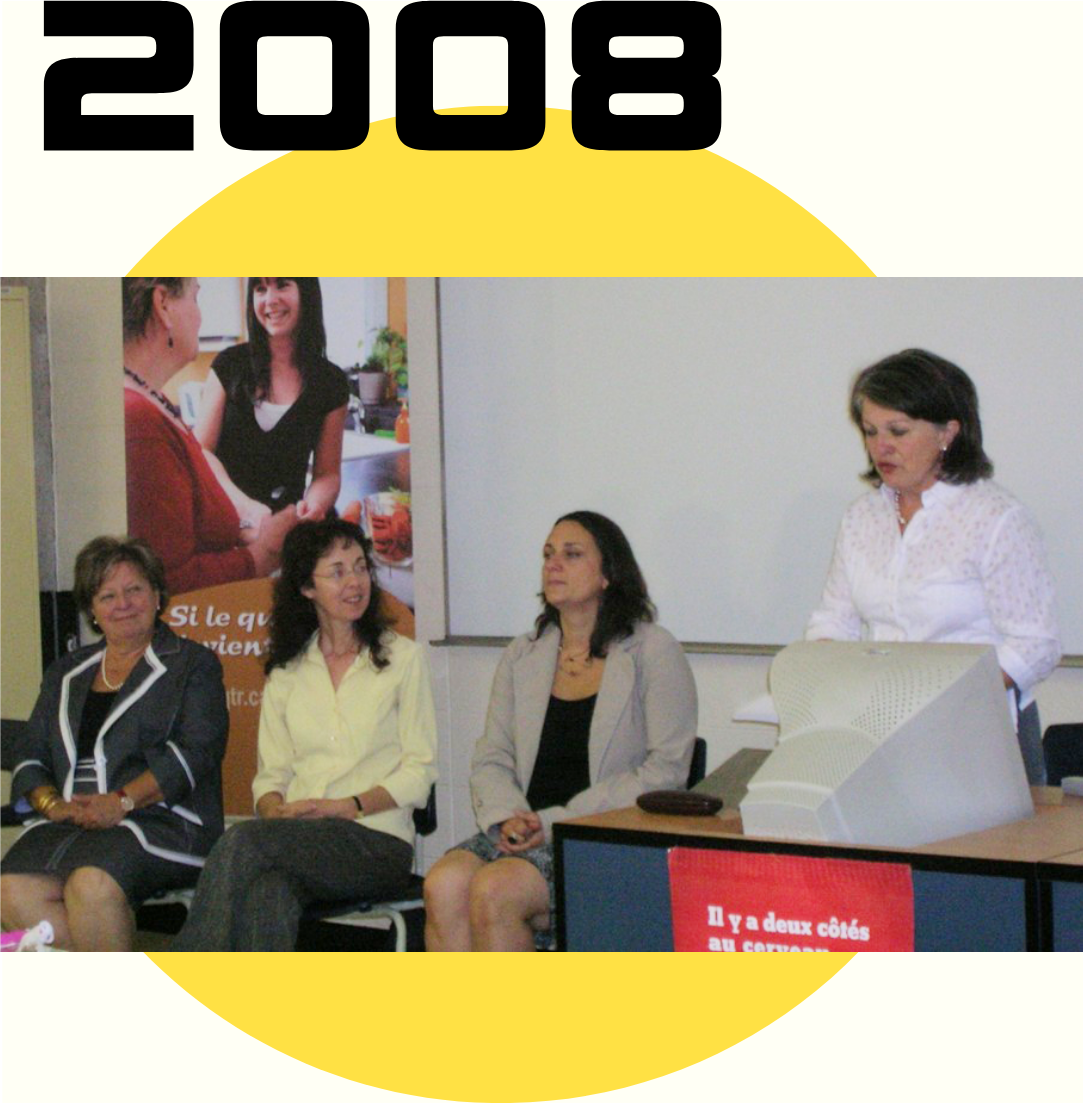
A primary health care leadership summit called "It's All About Access” was jointly hosted by CAOT, the Canadian Physiotherapy Association (CPA), and the Canadian Association of Speech-Language Pathologists and Audiologists (CASLPA) to build advocacy and leadership skills among audiologists, OTs, physiotherapists, and speech-language pathologists for integration into interprofessional primary health care teams.
REFERENCE: (von Zweck, CAOT 2007–2008 Mid-Year Report, 2008)
The University of Québec at Trois-Rivières launched its occupational therapy program.
REFERENCE: Québec, L. d. (2024, décembre 3). Retour sur les festivités du 50e anniversaire de l'Ordre des ergothérapeutes du Québec. Retrieved from www.oeq.org: https://www.oeq.org/a-propos-de-l-ordre/salle-de-presse/actualites/284-retour-sur-les-festivites-du-50e-anniversaire-de-l-ordre-des-ergotherapeutes-du-quebec.html
The City of Whitehorse hosted the annual Conference, bringing CAOT's flagship event to the Yukon for the first time.
REFERENCE: (von Zweck, CAOT 2007–2008 Mid-Year Report, 2008)

University of Alberta students share information about occupational therapy across the campus during OT Month.
The gOT Spirit Challenge, a nation-wide challenge during OT Month, was created by Pamela Armstead, an innovative University of Alberta graduate, after she noticed that students in her program had few connections with occupational therapy students in other programs across Canada. Pam’s vision was to connect occupational therapy students through a meaningful activity that would create a sense of shared identity and a groundswell of excitement among students about the potential of occupational therapy. The inaugural winner was the University of Western Ontario.
REFERENCE: (Brianna Boyle, 2012)

The Practice Profile for Support Personnel in Occupational Therapy in Canada was published with CAOT taking a leadership role to facilitate its development. Educational programs of support personnel in occupational therapy contributed to the development of the Profile through both in-kind and human resources to serve in advisory and working group capacities.
REFERENCE: (Therapists C. A., The Practice Profile for Support Personnel in Occupational Therapy in Canada , 2009)
IMAGE: CAOT files

CAOT launched the National Blueprint for Injury Prevention in Older Drivers project in collaboration with McGill University and funding support from the Public Health Agency of Canada. Led by Dr. Nicol Korner-Bitensky, this initiative resulted in a national interdisciplinary strategy to reduce driving accidents that involve older drivers. CAOT worked with a variety of stakeholders, including older drivers and their families, health care professionals, driving evaluators, and policy makers, to conduct research and address health needs for older drivers.
REFERENCE: (University, 2009)

CIHI released its third annual workforce database report, which revealed Canada's supply of OTs remained low at 38 per 100,000 population when compared to other countries with socialized health systems—Denmark (114), Sweden (104), Belgium (54), and Australia (50)—with Saskatchewan having the lowest provincial rate at 24 per 100,000. CAOT continued advocacy efforts to address critical workforce shortages, informed by annual contributions of membership data to the CIHI database.
REFERENCE: (von Zweck, 2009 – 2010 Midyear Report, 2010)
CAOT launched a new web portal (www.gocanadaot.com) for internationally educated occupational therapists (IEOTs), funded by the Government of Canada's Foreign Credential Recognition Program in partnership with ACOTRO and ACOTUP. The portal addressed barriers identified in CAOT's 2006 Workforce Integration Project by providing a centralized source of information for IEOTs seeking entry to practice in Canada.
REFERENCE: (von Zweck, 2009 – 2010 Midyear Report, 2010)

CAOT began hosting a series of web-enabled “Lunch & Learn” sessions that allowed members to participate in one-hour professional development opportunities from the convenience of their home or office. The free “Water Cooler Talks” regularly shared information and provided opportunities for interactive discussions regarding the work of CAOT with members.
REFERENCE: (von Zweck, 2009 – 2010 Midyear Report, 2010)
IMAGE: CAOT files
2009 (5)

CAOT published You, Me and My OT, a children's book written by OT Paulette Bourgeois, the author of the Franklin the Turtle series, a children’s book franchise that has sold more than 60 million copies worldwide and translated into 38 languages. You, Me and My OT was illustrated by Kristi Bridgeman, and CAOT created a reading circle kit about the book for its members to share during OT Month. The 32-page book (English-only) tells the story of Emma, a young girl with cerebral palsy who participates in classroom activities with help from her OT. It was designed to promote greater understanding of the profession among elementary school children, parents, teachers, and caregivers.
REFERENCE: (von Zweck, 2009 – 2010 Midyear Report, 2010)
IMAGE: CAOT files

CAOT created its first social media accounts on Facebook and Twitter to provide a new forum of communication for its members and the public.
REFERENCE: (von Zweck, 2010-2011 Midyear Report, 2011)
CAOT-BC was created as the first provincial chapter of CAOT to maintain professional representation in the province, following the closure of the British Columbia Society of Occupational Therapists (BCSOT). The integrated model eliminated duplication by leveraging CAOT's existing infrastructure while allowing CAOT-BC to focus on provincial priorities such as advocacy, local special interest groups, and practice issues through a managing director position and advisory committee. OT Giovanna Boniface became the managing director of CAOT-BC. This transition to the new Chapter, which was funded by a modest $75 fee increase for BC members and guided by clear strategic priorities, served as a potential model for coordinated national and provincial collaboration in other Canadian jurisdictions.
REFERENCE: (von Zweck, 2011-2012 Midyear Report, 2012)

The Occupational Therapist Assistant and Physiotherapist Assistant Education Accreditation Program (OTA & PTA EAP) published its new accreditation standards, which have been used to accredit programs and have been subject to revisions, most notably in 2016. The 2012 standards introduced new guidance for programs and reviewers and made some criteria "core," meaning they are essential for accreditation, such as a minimum of 500 fieldwork hours for programs.
REFERENCE: (Accreditation Standards, 2012)
CAOT culminated its 85th anniversary celebrations with a reception at the World Federation of Occupational Therapists (WFOT) Council meeting in Taipei, the capital of Taiwan. The reception also marked WFOT's 60th anniversary.
REFERENCE: (von Zweck, 2011-2012 Midyear Report, 2012)
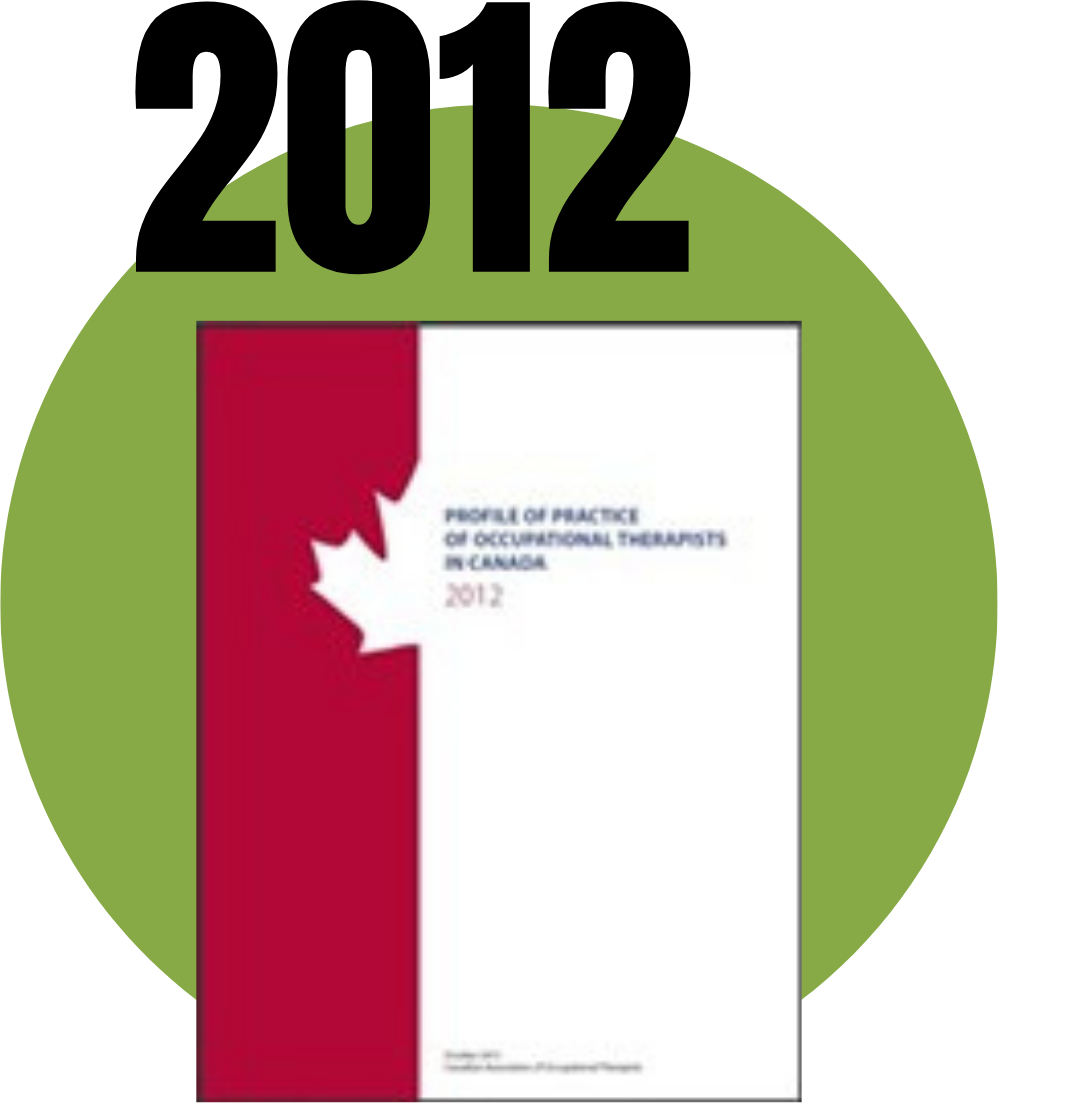
A revision of the first Profile of Practice of Occupational Therapists in Canada was published to reflect current evidence in the areas of competency and Canadian occupational therapy practice. The Profile provided a vision for practice and a model for excellence for occupational therapy in Canada and aligned with the professional directions presented in the CAOT publication, Enabling Occupation II: Advancing an Occupational Therapy Vision of Health, Well-being, & Justice through Occupation.
REFERENCE: (Therapists C. A., 2012)
IMAGE: CAOT files
CAOT introduced a new e-book technology to help with accessibility to our publications, particularly in international markets. At the time, international interest in CAOT publications had led to the recent translation of Enabling Occupation II into Japanese and the McGill Ingestive Skills Assessment into Italian.
REFERENCE: (von Zweck, 2011-2012 Midyear Report, 2012)

Dr. Rachel Thibeault, a Muriel Driver recipient in 2002, received the Order of Canada for empowering marginalized people around the world. An OT and professor at the University of Ottawa, she developed rehabilitation and social integration programs for landmine survivors, war-affected children, and people living with HIV/AIDS and leprosy. She shares her experiences as a speaker, inspiring a generation of occupational therapists and other professionals to expand their practice beyond traditional boundaries.
REFERENCE: (Canada, Dr. Rachel Thibeault, 2012)

The National Occupational Therapy Examination and Practice Preparation (OTepp) Project, funded by the Foreign Credential Recognition Program, developed innovative exam preparation resources, including the Trial Occupational Therapy Examination and Manual (TOTEM) and the online Trial Occupational Therapy Examination (TOTE), available to both IEOTs and Canadian-educated OTs. The project also piloted an online Examination Module, which was released in fall 2012, to begin analyzing barriers to supervised practice opportunities for IEOTs with Canadian employers, while expanding access to existing online modules on mentoring and career planning for all Canadian OTs.
REFERENCE: (von Zweck, 2011-2012 Midyear Report, 2012)
With funding from Human Resources and Skills Development Canada (HRSDC), CAOT delivered a national “train the trainer” series to build capacity among interprofessional health-care providers to address elder abuse and mistreatment. These new resources included the identification, prevention, assessment, and intervention protocols, as well as legislation and regulatory requirements.
REFERENCE: (Craik, CAOT 2013-2014 Midyear Report , 2014)

CAOT introduced a new membership category for corporate associates, following changes to the Canada Not-for-profit Corporations Act (CNCA). This category welcomed organizations, companies, and service providers that share our professional interests, values, and goals, and provided opportunities to corporate groups to establish an affiliation with CAOT and show their support for occupational therapy in Canada.
REFERENCE: (Craik, CAOT 2013-2014 Midyear Report , 2014)
CarFit launched in Canada through a partnership between CAOT and the Canadian Automobile Association (CAA), which was initially developed by the American Automobile Association (AAA), the American Association of Retired Persons (AARP), and the American Occupational Therapy Association (AOTA). It’s designed to help drivers “fit” in their cars. The program offers free, 20-minute reviews with a trained CarFit technician, coordinator, or instructor who completes a 12-point checklist to help drivers, particularly seniors, adjust their vehicles to fit them better for improved safety and comfort.
REFERENCE: (Therapists C. A., Annual Report 2013-2014, 2014)

Karen Goldenberg was appointed as a Member of the Order of Canada in recognition of her devotion to helping others in her community and advancing the field of occupational therapy. An OT by training, she co-founded the Community Occupational Therapy Associates and the Canadian Occupational Therapy Foundation to advance the profession. As a leader in the social service sector, notably through JVS Toronto, she championed programs to assist the elderly, those with mental health and cognitive challenges, disenfranchised youth, and newcomers to Canada.
REFERENCE: (Canada, gg.ca, 2014)
CAOT launched a Product Recognition Program to provide evidence-informed endorsements of products that supported engagement in everyday occupations. Applications underwent a review by a panel of selected OTs who produced detailed reports with recommendations, allowing end-users to make informed decisions based on CAOT's seal of recognition. The first product to receive recognition from CAOT was the Stander Handybar, a device that provides people with better hand support while transferring in and out of a vehicle.
REFERENCE: (Craik, 2014-2015 Midyear Report , 2015)

CAOT hosted its first virtual annual general meeting (AGM) on March 31. Previously, the AGM was held during CAOT’s annual conference in May or June, but changes to the Canada Not-for-profit Corporations Act required a shift in the timing. The AGM was broadcast from the national office, with participants viewing it from their personal workspace or attending one of the 15 sites across Canada. The CAOT National Office staff also moved from its long-time space at Carleton University into the new facility after purchasing and renovating a building at 34 Colonnade Road in Ottawa.
REFERENCE: (Craik, 2014-2015 Midyear Report , 2015)

CAOT expanded the CarFit program across the country, including the introduction of AutoAjuste, the new French component to the program, which was launched in Montréal. CarFit was also promoted as part of an MP reception on Parliament Hill in Ottawa to discuss the role of occupational therapy in the federal jurisdiction.
REFERENCE: (Craik, 2014-2015 Midyear Report , 2015)
CAOT-Qc began as a new CAOT provincial Chapter to better serve the representational needs of Québec OTs. More than 1,300 OTs across the province expressed interest in the Chapter through 22 in-person forums and seven webinars in both official languages. OT France Verville took on the role of the managing director of CAOT-Qc.
REFERENCE: (Canadian Association of Occupational Therapists, 2016)
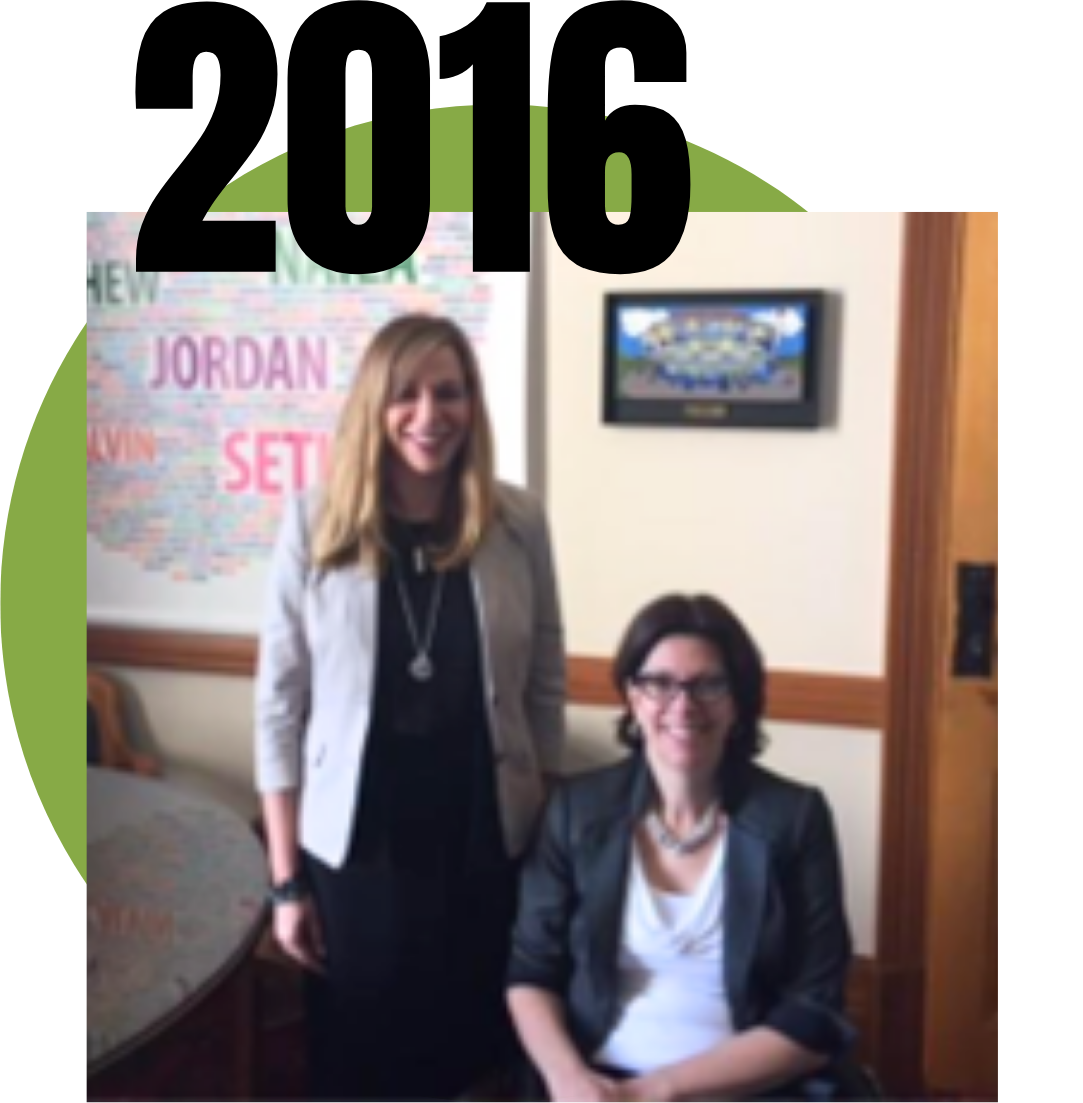
CAOT-BC Managing Director Giovanna Boniface with Minister Stephanie Cadieux, Minister of Children and Family Development.
CAOT-BC held an inaugural Occupational Therapy Day at the BC Legislature, sponsored by Minister of Health Dr. Terry Lake. Under the theme "Enabling British Columbians for the Occupations of Life," CAOT-BC representatives met with provincial ministers and parliamentary secretaries to discuss critical issues, including waitlists for children's occupational therapy services, workforce planning, residential care service gaps, and the maldistribution of therapists across health regions.
REFERENCE: (Canadian Association of Occupational Therapists, 2016)
Find an OT was launched on CAOT’s website to build better connectivity for the public and the profession by offering members a personalized directory listing so they could be found easily by individuals searching for occupational therapy services, with almost 3,000 CAOT members choosing to be listed within the first year.
REFERENCE: (Canadian Association of Occupational Therapists, 2016)

CAOT staff and members of the conference organizing committee.
CAOT published “Working for the Canadian Armed Forces and Veterans Affairs Canada: A Guidance Document for Occupational Therapists,” developed through collaboration with Veterans Affairs Canada (VAC), Canadian Armed Forces (CAF) Health Services, and occupational therapy leaders.
REFERENCE: (Canadian Association of Occupatiional Therapists, 2017)
The Canadian National Driver Rehabilitation Conference took place in Ottawa, Ontario, co-hosted by CAOT and the Association for Driver Rehabilitation Specialists. The event, which was held over two days in October at the Ottawa Conference and Event Centre, brought together professionals in driver assessment and rehabilitation to discuss the latest trends, research, and advancements in adaptive equipment, vehicle modification, and rehabilitation strategies.
REFERENCE: (Canadian Association of Occupatiional Therapists, 2017)

CAOT’s Mentorship on Demand program was launched to help OT mentees navigate their career development by being matched with a mentor and providing them with program resources to guide their discussions.
REFERENCE: (Canadian Association of Occupational Therapists, 2018)
IMAGE: CAOT files (program banner)

Dr. May Law, a Muriel Driver Memorial Award recipient in 1991, was awarded the Order of Canada in recognition for her work in occupational therapy, particularly with children with disabilities and their families. Her visionary approach to rehabilitation called for modifying the environment to suit the individual’s needs—a transformative concept in the 1980s. As a professor emerita and former associate dean, health science (rehabilitation), at McMaster University, Mary is a pre-eminent leader in occupational therapy whose scholarship forms part of the field’s research canon and has shaped clinical practice worldwide. She is also the co-founder of CanChild, a world-leading institute in childhood disability research and knowledge translation that champions the full participation of children with disabilities in society.
REFERENCE: (Canada, 2017)
CAOT-North was started as a new CAOT Chapter to serve as the professional voice for occupational therapists in the Yukon, Northwest Territories, and Nunavut. Wade Scoffin took on the role of managing director of CAOT-North.
REFERENCE: (Canadian Association of Occupational Therapists, 2018)
The 2009 practice profile was revised and retitled as the "Practice Profile for Occupational Therapist Assistants (OTA)" to reflect advances in the national recognition and educational accreditation. The profile served multiple purposes: career planning for OTAs, service component assignment by OTs, performance appraisals by managers and supervisors, workforce planning and qualification assessment by employers, recognition of qualifications, and quality education development by OTA programs, and CAOT accreditation of Canadian OTA education programs.
REFERENCE: (Canadian Association of Occupational Therapists, 2018)
IMAGE: CAOT files

Hélène Sabourin became CAOT’s Chief Executive Officer in December 2018, marking the first time since the 1960s that a non-OT served in the leadership role. A registered nurse with a Master of Health Administration from the University of Ottawa, Sabourin brought extensive healthcare leadership experience, including senior roles at Accreditation Canada, the Canadian Nurses Foundation, and the Canadian Nurses Association.
REFERENCE: (Canadian Association of Occupational Therapists, 2018)

CAOT established an Occupational Therapy Truth and Reconciliation Commission (TRC) Task Force for occupational therapy in Canada, along with representatives from ACOTRO and ACOTUP. Led by Co-Chairs and Métis occupational therapists Angie Phenix and Kaarina Valavaara, the primary goal was to promote leadership within the profession, lead the way towards culturally safer research, clinical practice, and education, and support reconciliation and decolonization. The Task Force presented its Action Plan in November 2020, and the governance structure was expanded in 2021 to include representation from Occupational Therapy Canada (OTC) member organizations. These efforts aim to address long-standing health inequities of First Nation, Inuit, and Métis peoples and contribute to dismantling oppressive structures and systemic racism.
REFERENCE: (Canadian Association of Occupational Therapists, 2020)

CAOT Virtual 2020, our first-ever digital Conference, took place in May with more than 535 delegates from Canada and around the world. Originally scheduled to take place in Saskatoon, Saskatchewan, CAOT’s team pivoted quickly when the COVID pandemic began in March. The digital event featured 104 live presenters, 20 pre-recorded sessions, and 29 posters.
REFERENCE: (Canadian Association of Occupational Therapists, 2020)
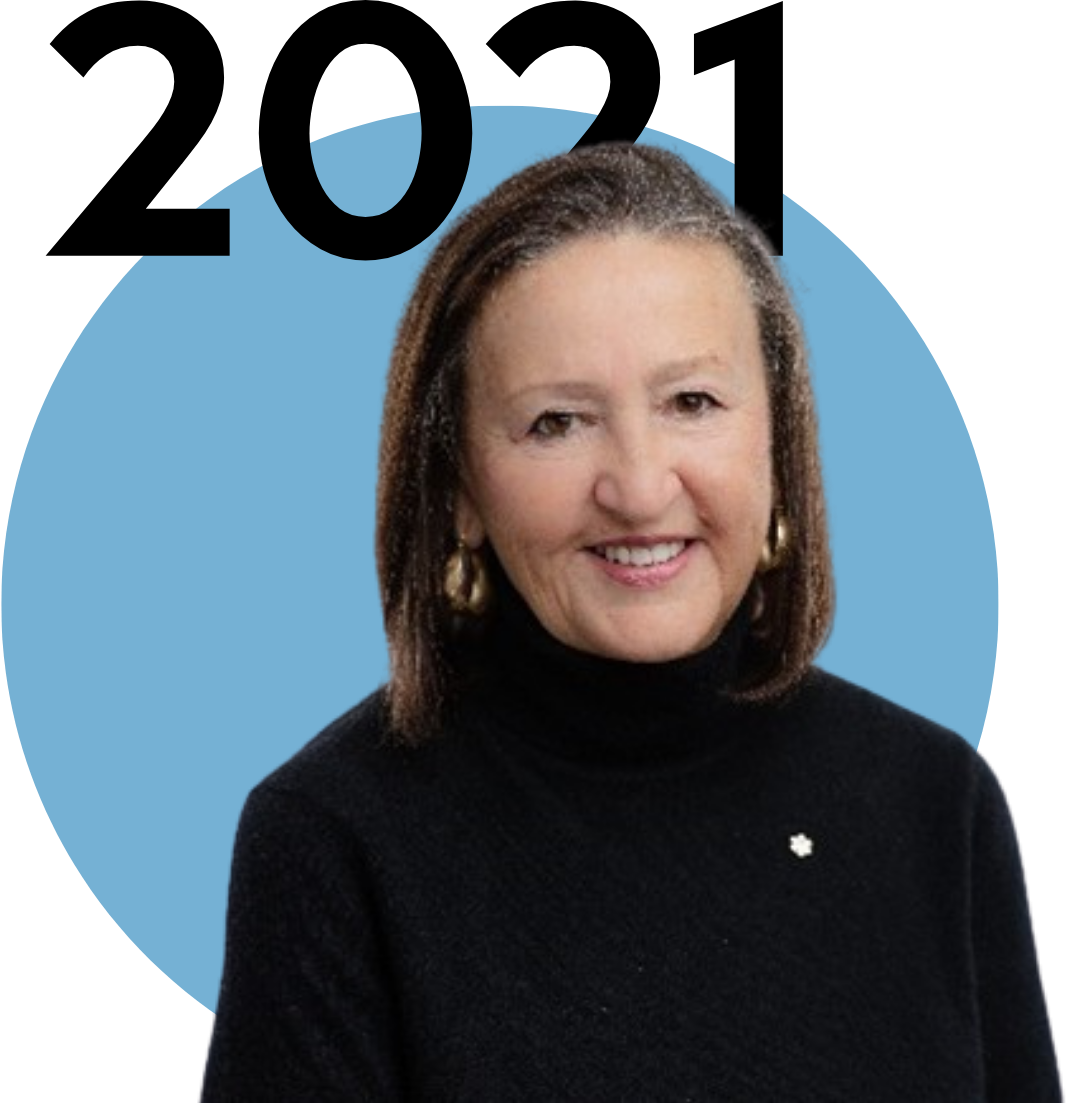
Dr. Helene J. Polatajko, a Muriel Driver Memorial Award recipient in 1992, was awarded the Order of Canada in recognition of her transformative contributions to occupational therapy, occupational science, and the understanding of developmental coordination disorder. A pre-eminent researcher and CAOT collaborator, Dr. Polatajko co-authored Enabling Occupation II: Advancing an Occupational Therapy Vision for Health, Well-being & Justice through Occupation and co-authored the Canadian Occupational Performance Measure, now used in over 35 countries. Her groundbreaking CO-OP Approach (Cognitive Orientation to daily Occupational Performance) has revolutionized rehabilitation worldwide, with instructors trained in over 20 countries to help clients with various diagnoses achieve their goals.
REFERENCE: (Canada, Dr. Helene Polatajko, 2021)
CAOT launched Occupational Therapist Assistant (OTA) Appreciation Day on October 12 as part of its annual OT Month celebrations to honour the dedication of OTAs across Canada.
REFERENCE: none

Conversations that Matter: The Podcast launched with discussions about emerging trends and issues in the occupational therapy profession and the health care system in Canada. The first episode focused on how occupational therapists were rethinking documentation. Host Justine Jecker, CAOT’s Director of Professional Practice, holds conversations with OTs, OTAs, OT and OTA students, and interprofessional colleagues monthly to challenge the status quo, learn about innovative practices, and advance the profession.
REFERENCE: (Canadian Association of Occupational Therapists, 2025)
The Competencies for Occupational Therapists in Canada were launched, thanks to guidance from OTs and key stakeholders across Canada, as well as our collaborative work with ACOTUP and ACOTRO. The development of a single set of competencies to clarify occupational therapy as a profession in Canada was completed to advance safe, effective, and ethical patient care. Funded in part by the Government of Canada’s Foreign Credential Recognition Program, the competencies will be implemented over the next few years in the national exam and accreditation standards at a national level.
REFERENCE: (Association of Canadian Occupational Therapy Regulatory Organizations, Association of Canadian Occupational Therapy University Programs, Canadian Association of Occupational Therapists, 2021)

The National Occupational Therapy Certification Examination (NOTCE), which is administered by CAOT, transitioned to an online exam format with live remote proctoring for the January 2021 sitting. A new, bilingual website was also launched to provide information, answers to frequently asked questions, and materials, such as practice exams, study guides, the NOTCE online prep class, and the most recent resource manual.
REFERENCE: (Canadian Association of Occupational Therapists, 2022) (Canadian Association of Occupational Therapists, 2025)
CAOT held a virtual multi-track, interdisciplinary conference, titled "Home is where the heart is: Creating opportunities for aging in place," that was co-constructed with older adults and featured keynote speaker Dr. Samir Sinha. More than 320 people attended the two-day event, which included 37 sessions for professionals, older adults, and care partners, with lived experience presentations, mini-workshops, and exhibitor sessions focused on maintaining independence, safety, and quality of life while aging at home.
REFERENCE: (Canadian Association of Occupational Therapists, 2022)
CAOT-SK was established as the newest provincial Chapter to provide representation and support to OTs in Saskatchewan, offering the benefits of national CAOT membership along with additional regional benefits, such as practice resources, networking opportunities, and professional development. Christine Fleming, an OT who formerly served on CAOT’s Board of Directors, took on the role of CAOT-SK’s Regional Director.
REFERENCE: (Canadian Association of Occupational Therapists, 2023)

CAOT’s 2022 Muriel Driver Memorial Lectureship in Whistler, BC, was given by Dr. Barry Trentham, the first man in the award’s history to receive the honour at the CAOT. Drawing lessons from his attempts to straddle the disconnects between LGBTQ+ lived realities and occupational therapy’s anti-oppression aspirations, the lecture was titled, Occupational (Therapy's) Possibilities: A Queer Reflection on the Tangled Threads of Oppression and Our Collective Liberation. The Whistler event, titled CAOT Conference 2022: Hybrid, was also the first time that members of the Canadian occupational therapy community were able to unite in person since the beginning of the pandemic. Held from May 4-7, the 86th conference featured more than 150 presentations, 424 in-person attendees, and 166 virtual participants.
REFERENCE: (Canadian Association of Occupational Therapists, 2022)

CAOT published Promoting Occupational Participation: Collaborative Relationship-Focused Occupational Therapy. Developed by the co-editors, Mary Egan and Gayle Restall, along with 40 authors, and an advisory panel consisting of Canadian and international occupational therapists, and public members, the book addresses the fundamental purpose of occupational therapy – helping others to gain access to, initiate, and sustain occupational participation. It features the new Canadian Model of Occupational Participation (CanMOP) and the Canadian Occupational Therapy Inter-Relational Practice Process (COTIPP) Framework.
REFERENCE: (Mary Egan and Gayle Restall, 2022)

Phillip Wendt became the first male OT to serve as President of CAOT’s Board of Directors, beginning his two-year term on October 1, 2022. Phillip brought more than 20 years of experience working with people with arthritis and other chronic health conditions. He had previously served as president of the Society of Alberta Occupational Therapists and as CAOT’s Ontario Board Director.
REFERENCE: (Canadian Association of Occupational Therapists, 2022)
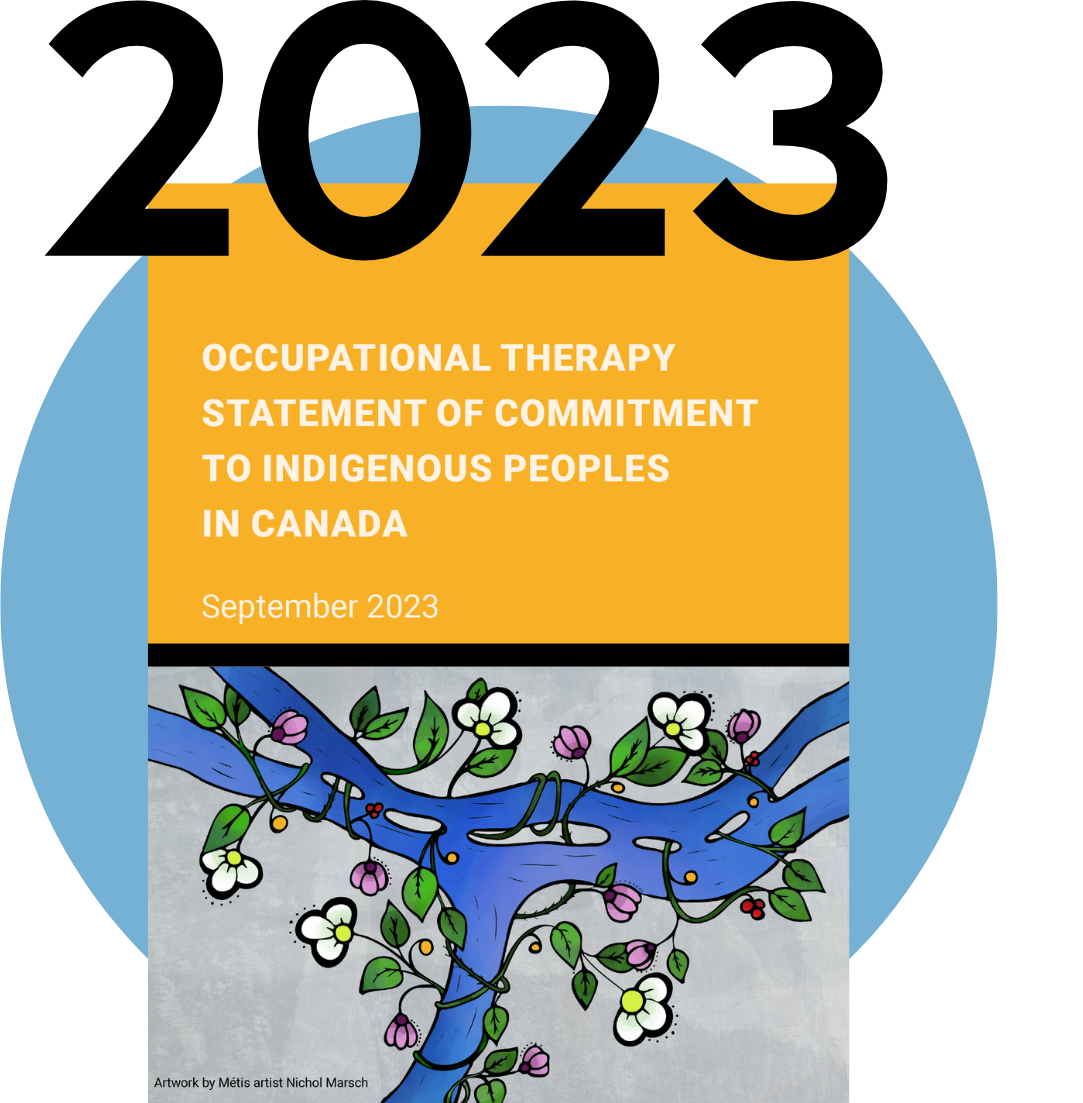
CAOT and Canada's leading occupational therapy organizations announced a joint Occupational Therapy Statement of Commitment to Indigenous Peoples in Canada on September 30, National Day for Truth and Reconciliation, reaffirming their dedication to Indigenous Peoples and addressing the TRC's Calls to Action. The statement was developed by the Occupational Therapy Canada TRC Task Force Co-Chairs, Métis OTs Angie Phenix and Kaarina Valavaara, with representatives from CAOT, COTF, ACOTPA, ACOTRO, and ACOTUP. The TRC Task Force also released a final report outlining recommendations and next steps for the occupational therapy profession. Métis artist and occupational therapist Nichol Marsch was commissioned for the beautiful artwork that accompanies the Statement of Commitment.
REFERENCE: (Canadian Association of Occupational Therapists, 2023)

The new Find an Occupational Therapy (OT) Mentor program was launched and successfully engaged 832 participants in its first year. The new mentorship program featured the ability for mentor-mentee relationships to be self-matched using specified criteria and allowed OTs and OTAs to work together free of any financial commitment. It also enabled mentors and mentees to self-identify in different ways, as they wish, within categories such as sexual orientation, race, ethnicity, or practice experience. This allowed underrepresented occupational therapy professionals to connect, support, and learn with and from each other.
REFERENCE: (Canadian Association of Occupational Therapists, 2023)

Two major changes were announced at CAOT’s Annual General Meeting – the creation of a dedicated Indigenous Board Director position and the inclusion of occupational therapist assistants (OTAs) as voting members for the first time. The Indigenous Board Director position was a pivotal step in meeting the TRC Commitment of Statement and ensuring that Indigenous perspectives and leadership are permanently woven into CAOT’s strategic decision-making going forward.
A new joint position statement, “Toward Equity and Justice: Enacting an Intersectional Approach to Social Accountability in Occupational Therapy,” was published. This important document addresses systemic oppressions affecting health, social, and economic systems, thanks to the tireless dedication and collaborative efforts of OTs from diverse practice settings and perspectives.
REFERENCE: (Canadian Association of Occupational Therapists, 2023-2024)
CAOT published the Competencies for Occupational Therapist Assistants (OTAs), developed through a national collaborative effort. An OTA Competencies Task Force, comprising participants from Prince Edward Island, Ontario, Alberta, and British Columbia, brought together OTA educators from public and private programs, practicing OTAs from various settings, occupational therapists in leadership and regulatory roles, and a physiotherapist knowledgeable in accreditation processes. Based on the Competencies for Occupational Therapists in Canada, the document provided essential context for OTA inclusion within Canadian occupational therapy practice and outlined how the competencies were developed and can be applied across the profession.
REFERENCE: (Canadian Association of Occupational Therapists, 2024)

A team co-led by Catherine Donnelly and Nicole Bobette, in collaboration with CAOT and funded by the Foundation for Advancing Family Medicine, developed a suite of free online modules and resources to enhance the capacity of occupational therapy learners and practitioners to practice in collaborative primary care teams. The courses provide OTs with foundational knowledge about primary care and the services they can provide in this setting.
REFERENCE: (Canadian Association of Occupational Therapists, 2024)
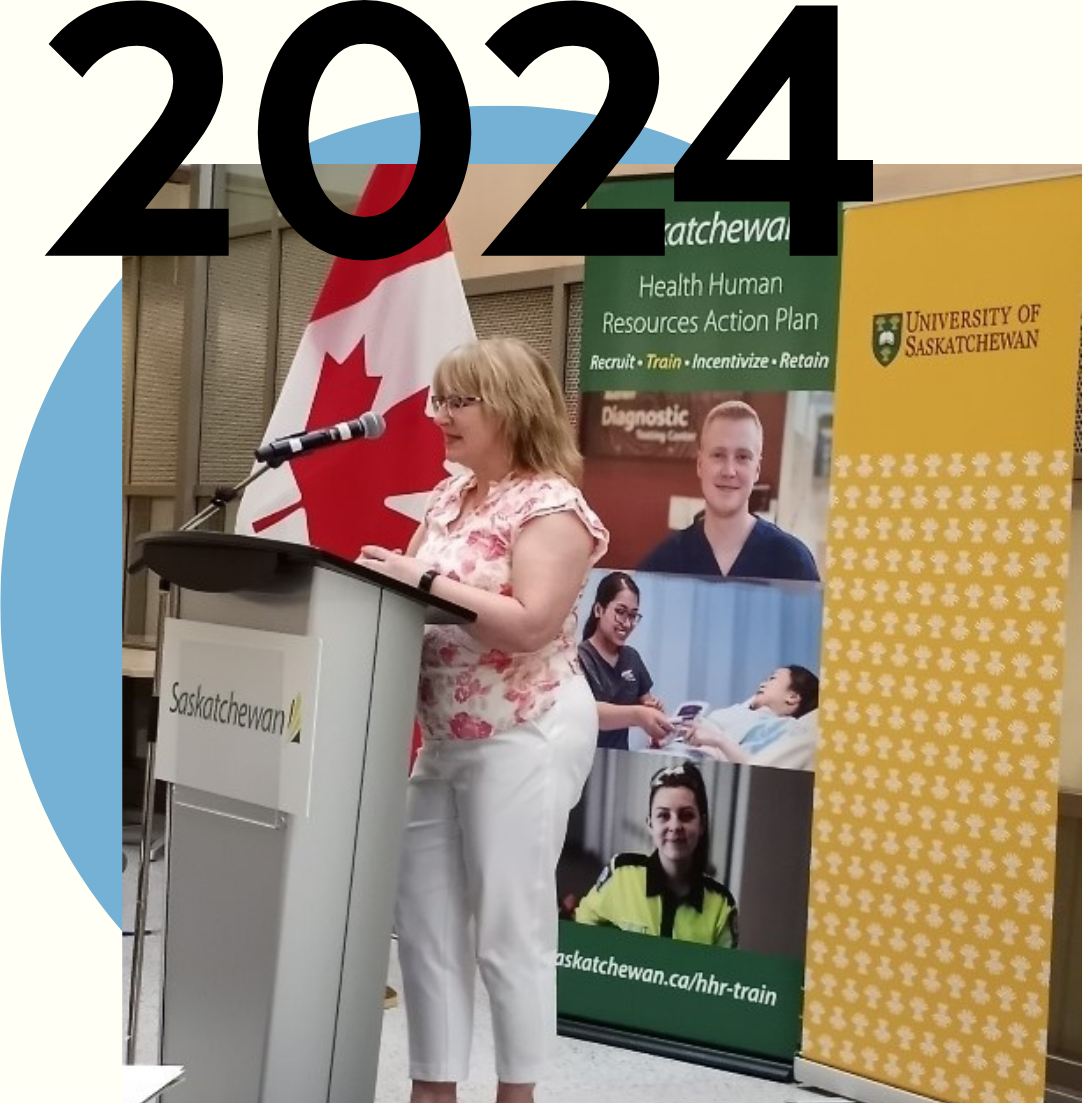
After more than four decades of advocacy, Saskatchewan OTs celebrated a landmark victory in 2024: a provincial government investment of approximately $8.1 million to establish the first-ever occupational therapy program in the province's history at the University of Saskatchewan. CAOT-SK spent years building the case through media interviews with CBC, CTV, and SaskToday, letters to the editor, and meetings with the Premier and Ministers of Health and Advanced Education. At the provincial government's June 2024 celebration ceremony, CAOT-SK Regional Director Christine Fleming delivered remarks honouring the many OTs who championed this cause. The program will launch in 2026.
REFERENCE: (Therapists, 2024)

CAOT completed a groundbreaking collection of evidence-based Occupational Therapy Practice Documents to support OTs and OTAs in articulating their roles across diverse practice areas. With more than 55 documents covering specialties from mental health and pediatrics to cancer care, ergonomics, and Indigenous health, these two-page resources serve as powerful tools for client education, employer advocacy, and professional recognition. Developed collaboratively with over 200+ Canadian occupational therapy professionals, the Practice Documents advance career development while strengthening the profession's visibility with stakeholders, insurance providers, and the public.
REFERENCE: (Canadian Association of Occupational Therapists, 2023-2024)
Occupational Therapy Now (OT Now) became open-access, allowing free public access to the long-time practice magazine, following the Board’s decision made the year before. This decision was designed to increase visibility for Canadian occupational therapy practice, research, and innovation. Each OT Now article is now assigned a Digital Object Identifier (DOI) for easy sharing, reflecting CAOT's commitment to raising public awareness, improving equity, and advancing the profession.
REFERENCE: none

A voluntary national registry was launched by CAOT to support and recognize the contributions of occupational therapist assistants (OTAs) and personnel non-ergothérapeute (PNEs) across Canada. Since the term OTA is not used consistently across Canada, the registry is open to anyone who supports an occupational therapist in delivering interventions, including rehabilitation assistants, therapeutic assistants, OTA/physiotherapist assistants (PTAs), and OTA/dually trained. The registry asks for information about themselves and their practice over the next year to help strengthen visibility and advocacy for their role. OTs were also asked to highlight how OTAs and PNEs contribute to their teams and enhance service delivery.
REFERENCE: (Canadian Association of Occupational Therapists, 2025)
CAOT launched Retired OT Appreciation Day on October 19 as part of its annual OT Month celebrations to honour the legacy and wisdom of our retired colleagues.
CAOT returned to its original name, “The Canadian Association of Occupational Therapy,” and unveiled a new logo featuring a vibrant green maple leaf to mark its centennial anniversary. The name change honours the association’s roots from 1926 and better reflects both OTs and OTAs working together under the occupational therapy umbrella, while the green maple leaf pays tribute to the iconic uniform worn by Canada’s groundbreaking “ward aides” during World War I.
REFERENCE: (Canadian Association of Occupational Therapists, 2025)